

Our Verdict
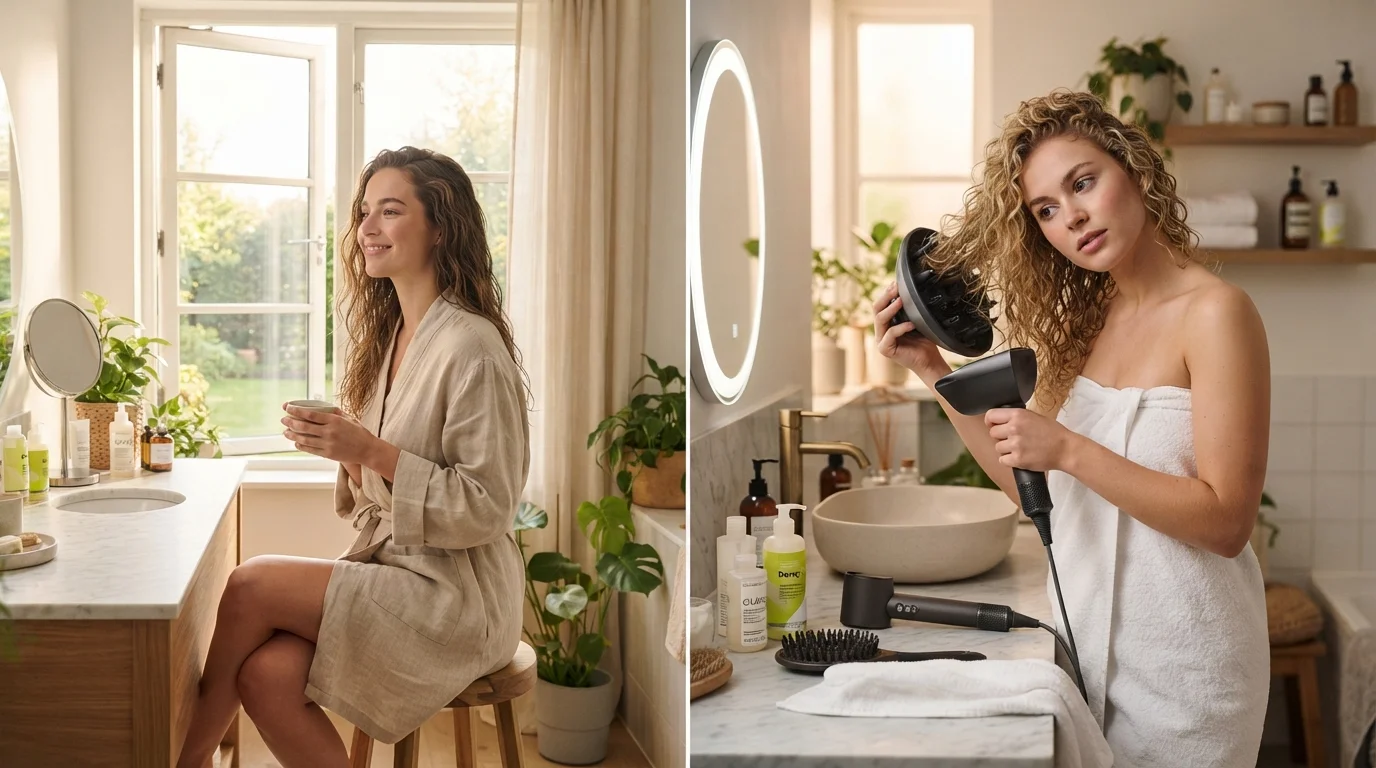
Neither air drying nor blow drying is universally superior. Air drying avoids direct heat but exposes hair to prolonged swelling stress, while blow drying delivers controlled heat that, when used correctly, can actually limit that swelling with less cumulative damage. The winning method depends on your hair type, porosity, and how carefully you apply either technique.
Anyone willing to adjust their routine based on their specific hair texture and porosity rather than defaulting to one method out of habit.
The Science Behind Each Method
The assumption that air drying is always the gentler option is more complicated than it appears. Hair strands contain a cortex — an inner layer that absorbs water and swells when wet. Research published in the Journal of Cosmetic Science has found that prolonged water exposure keeps the cortex in a swollen state, creating internal pressure called osmotic stress. The longer hair stays wet, the more this repeated swelling and contracting weakens the cuticle over time.
Blow drying applies direct heat, which presents its own risks — specifically, surface protein degradation and moisture loss when temperatures exceed around 230°F (110°C). However, moving a dryer continuously and maintaining a safe distance from the scalp reduces surface temperature significantly. The takeaway: both methods carry real risk, but through different mechanisms. Understanding which risk profile your hair is more vulnerable to is the starting point for a smarter routine. For a deeper look at how heat and other factors contribute to structural damage, see the types of hair damage and what recovery looks like.
How Hair Type and Porosity Change the Equation
Porosity — how readily your hair absorbs and releases moisture — is the most important variable in this decision. High-porosity hair (common in chemically treated, heat-styled, or naturally coarser textures) absorbs water quickly and loses it quickly too. It tends to stay wet for shorter periods, making air drying less problematic in terms of swelling time. However, high-porosity hair is already structurally compromised, so it's also more vulnerable to heat damage from a dryer.
Low-porosity hair takes much longer to fully dry, meaning the cortex stays swollen for extended periods — making air drying a less ideal choice for this group. A diffuser on a low or medium heat setting can move moisture out more efficiently without excessive heat exposure.
Fine or fragile hair is more susceptible to both mechanical stress (from rough towel drying before air drying) and heat damage. Rough handling while wet causes significant breakage regardless of how you ultimately dry your hair. If persistent dryness is part of your experience, the root cause may go beyond your drying method — why your hair feels dry no matter what you put on it explores underlying contributors worth knowing about.
A Note on Curl and Coil Patterns
Naturally curly and coily hair types often have areas of varying porosity along the same strand, making blanket advice less reliable. These textures also tend to be more prone to dryness because the scalp's natural oils have more difficulty traveling down the curl's bends. If you have tightly coiled hair, both methods require extra care: air drying without product can lead to frizz and tangles, while heat — even with a diffuser — should be used sparingly. Consulting a stylist familiar with your specific texture is a worthwhile step.
Pros and Cons at a Glance
Weighing the practical advantages and disadvantages of each approach helps clarify which habit is working for — or against — your hair. Here's an honest breakdown:
Air Drying
No direct heat exposure to the hair shaft
Avoiding heat altogether prevents surface protein damage and eliminates the risk of scorching, which is especially relevant for already-compromised or chemically treated hair.
Reduces styling tool dependency
Letting hair dry naturally removes one step from your routine and can help maintain natural curl and wave patterns without disruption from airflow or tension.
Lower risk of thermal mechanical stress
No brush-and-dryer tension means less pulling on the hair shaft, which is particularly beneficial for fine or fragile strands prone to breakage under manipulation.
Blow Drying
Prolonged wetness causes internal osmotic swelling
Extended exposure to water keeps the hair cortex swollen, which repeated daily weakens the cuticle layer and can make hair progressively more fragile over time.
High heat settings cause surface protein damage
Temperatures above approximately 230°F (110°C) begin to denature the keratin proteins in hair, leading to dryness, brittleness, and split ends if used consistently without protection.
Greater risk of scalp dryness with daily use
Directing concentrated heat at the scalp — especially without maintaining proper distance — can disrupt the scalp's moisture balance and irritate sensitive skin over time.
For context on how these methods fit into a broader styling strategy, protective styles, heat tools, and chemical treatments offers a balanced comparison of common approaches and their cumulative impact.
Practical Techniques That Make Either Method Safer
Whichever method you choose, technique will determine outcomes more than the method itself.
- Microfiber towel or cotton t-shirt: Swap a traditional terrycloth towel for a microfiber towel or soft t-shirt to gently remove excess water without roughing up the cuticle. This one change reduces breakage regardless of how you finish drying.
- Heat protectant application: If blow drying, apply a heat protectant to damp — not soaking wet — hair. Most protectants work by forming a barrier layer; applying them to saturated hair dilutes their effectiveness.
- The hybrid method: Let hair air dry to about 70–80% dry, then finish with a blow dryer on a low heat setting. This limits total heat exposure while reducing the swelling-stress window significantly.
- Dryer distance and movement: Keep the dryer nozzle at least 6 inches from the hair and keep it moving. Stationary heat — even at moderate temperatures — concentrates exposure on one area.
Daily habits around drying are one piece of a larger picture. habits that quietly undermine healthy hair over time covers other routine factors that accumulate into real damage over months and years.
230°F
Threshold where heat begins degrading hair proteins
Research in the Journal of Cosmetic Science identifies this approximate temperature as the point at which keratin structure begins to break down under sustained heat exposure.
6+ inches
Recommended blow dryer distance from hair
Maintaining at least six inches of distance between the dryer nozzle and hair significantly reduces surface temperature and the risk of localized heat damage.
The content on this site is for informational purposes only and is not a substitute for professional advice. Always consult a qualified professional for guidance specific to your situation.