

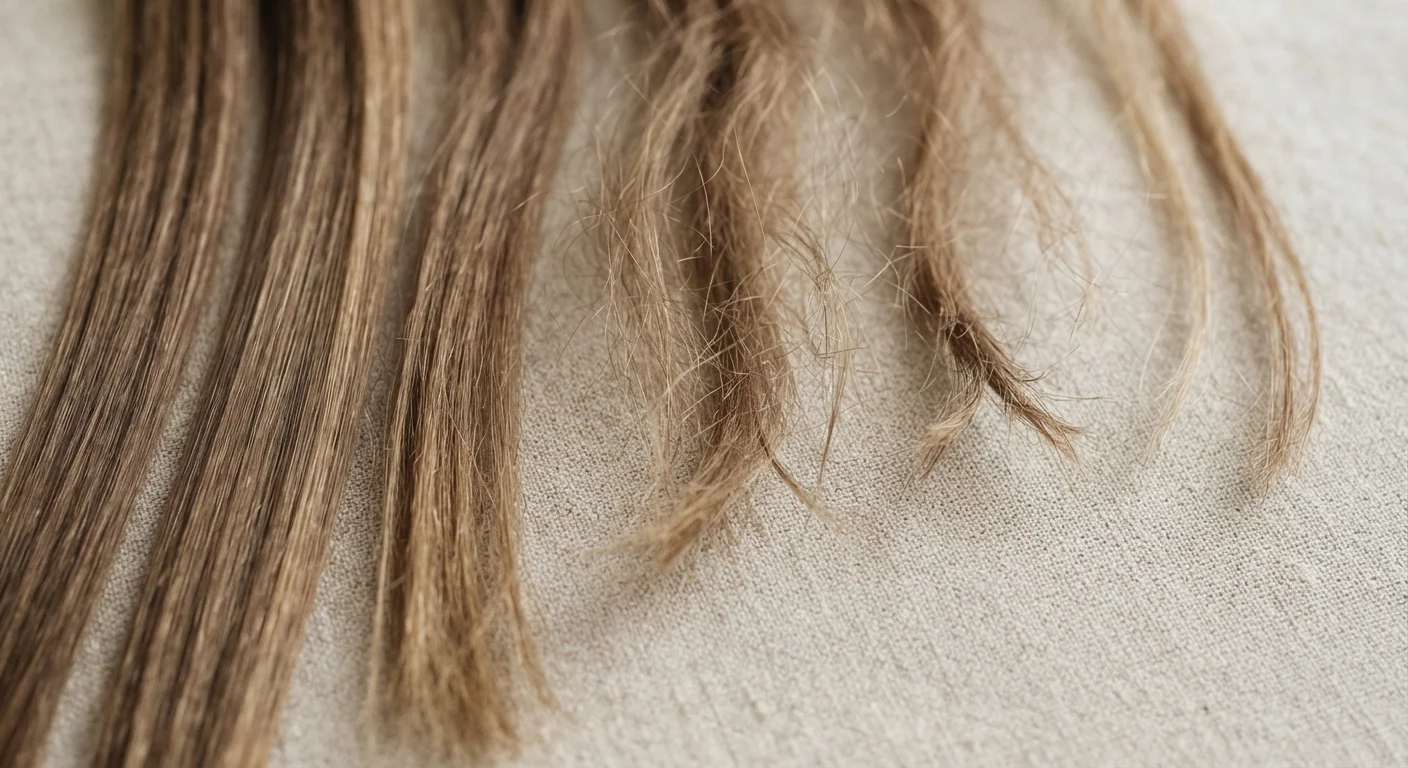
The Three Main Types of Hair Damage
Hair damage falls into three broad categories, and they don't behave the same way — which is why a single solution rarely works for everyone.
Heat damage occurs when high temperatures disrupt the hydrogen bonds within the hair's keratin structure. Flat irons, curling wands, and blow dryers used at excessive heat or without protection can permanently alter the hair's natural curl or wave pattern. Telltale signs include limp, straight sections that won't revert, a gummy or mushy feeling when wet, and chronic frizz that moisture doesn't resolve.
Chemical damage results from processes like bleaching, coloring, relaxing, or perming. These treatments break disulfide bonds in the cortex — the stronger, more structural bonds that give hair its shape. Overlapping chemical applications, particularly bleach on already-processed hair, can cause severe porosity, breakage, and in extreme cases, hair that disintegrates under tension. See our guide to heat tools and chemical treatments for a fuller look at how each method affects the strand.
Mechanical damage is caused by physical stress: aggressive brushing, tight hairstyles, rough towel-drying, friction from pillowcases, and excessive manipulation. This type of damage tends to show up as breakage — particularly at areas of repeated tension like the edges, nape, or ponytail line. Our article on daily habits that quietly undermine hair health covers many of these overlooked culprits.
~50%
Tensile strength lost after bleaching
Research on oxidative hair treatments suggests bleached hair can lose approximately half its tensile strength compared to untreated hair, depending on the number of sessions.
6"
Average annual hair growth in adults
Human hair grows roughly half an inch per month on average, meaning replacing a full head of significantly damaged length is a multi-year process for most people.
Over 300°F
Temperature at which keratin bonds begin to degrade
Dermatological literature notes that sustained exposure above this threshold can permanently alter hair's protein structure, particularly with repeated daily use.
What Recovery Actually Looks Like
Recovery is an honest word to use carefully here. Since hair is not living tissue, damaged strands cannot regenerate their structure. What recovery actually means is a combination of two things: improving the condition and appearance of existing strands while protecting the new, undamaged growth coming in from the scalp.
For existing strands, deep conditioning, protein-moisture balance, and reducing further damage are the primary tools. Bond-building treatments can help reinforce weakened cortex bonds to some degree, particularly after chemical processes. These are not cures — they improve manageability and temporarily fill cuticle gaps — but consistent use can significantly reduce breakage while you grow out healthier hair.
For new growth, the focus shifts to prevention. This means evaluating what caused the damage in the first place and adjusting your routine accordingly. If heat is your main source, consider how drying method affects your hair's health — the answer isn't always what you'd expect. If your routine relies heavily on products, understanding what common ingredients actually do can help you make smarter choices without overspending.
Prioritize Moisture-Protein Balance
Damaged hair often needs both moisture and protein, but too much of either causes problems — protein overload leads to brittleness, while moisture overload can make hair limp and weak. Start with a deep conditioning treatment and observe how your hair responds before adding a protein treatment. Your hair's texture and elasticity after washing are the clearest guides.
Realistic timelines vary widely. For someone with shoulder-length hair growing roughly half an inch per month, replacing significantly damaged length takes a year or more. Trimming split ends regularly keeps damage from traveling further up the shaft and helps the overall condition of your hair during that window.
Reading Your Hair's Signals
Before adjusting your routine, it helps to identify which type of damage is most present. The stretch test is a useful starting point: take a wet strand and gently pull it. Healthy hair stretches 30–50% before snapping and returns to its original length. Hair that snaps quickly with little stretch often lacks protein. Hair that stretches a great deal and doesn't return may be over-processed and lacking structural integrity.
Porosity — how readily hair absorbs and retains moisture — is another signal. High-porosity hair (common in chemically processed or heat-damaged hair) soaks up water fast but loses it just as quickly, leading to dryness and frizz. Low-porosity hair repels water initially but holds it longer once absorbed. Each responds differently to products and treatments.
It's also worth paying attention to your scalp, since hair health starts at the root. Chronic scalp issues can affect the quality of new growth before it even reaches visible length. Our piece on scalp health and what research actually supports separates evidence-backed care from marketing noise.
When Hair Loss Is More Than Damage
Breakage and shedding caused by mechanical or chemical damage differ from diffuse hair loss or thinning, which can be associated with nutritional deficiencies, hormonal changes, medical conditions, or other factors. If you are experiencing significant or sudden hair loss beyond typical breakage, this warrants evaluation by a dermatologist or trichologist — not a product switch.
This article is for general informational purposes only. If you are experiencing significant hair loss or scalp concerns, consult a qualified dermatologist or trichologist for personalized guidance.
Frequently Asked Questions
Hair is not living tissue, so true biological repair is not possible. Conditioning treatments and protein masks can temporarily fill gaps in the cuticle, improving appearance and reducing further breakage. The only permanent solution is growing out new, healthier hair while protecting it from ongoing damage.
Dry hair typically responds well to deep conditioning and feels improved after moisturizing. Heat-damaged hair often has a permanently altered texture — straightened in places, gummy when wet, or resistant to holding a curl — and does not bounce back with moisture alone.
Trimming away the most damaged ends prevents split ends from traveling up the shaft and causing further breakage. It does not affect how quickly new hair grows, but it does improve overall hair health and manageability in the meantime.
Both can be severe depending on frequency and technique. Chemical processes — especially overlapping bleach or relaxer applications — tend to cause more irreversible structural change in a single session. Heat damage, by contrast, often builds gradually through repeated exposure over time.
It depends on how much new, undamaged growth you need and your current hair length. Most people see meaningful improvement over six to twelve months of consistent protective practices, though heavily damaged hair may require longer — or a strategic cut to accelerate the transition.
Protein treatments can strengthen weakened strands, but overuse on hair that lacks moisture can make it brittle and prone to snapping. Balance is key — alternate protein and deep moisture treatments based on how your hair responds, rather than using both simultaneously or too frequently.
The content on this site is for informational purposes only and is not a substitute for professional advice. Always consult a qualified professional for guidance specific to your situation.