

Why These Three Properties Matter More Than Curl Pattern
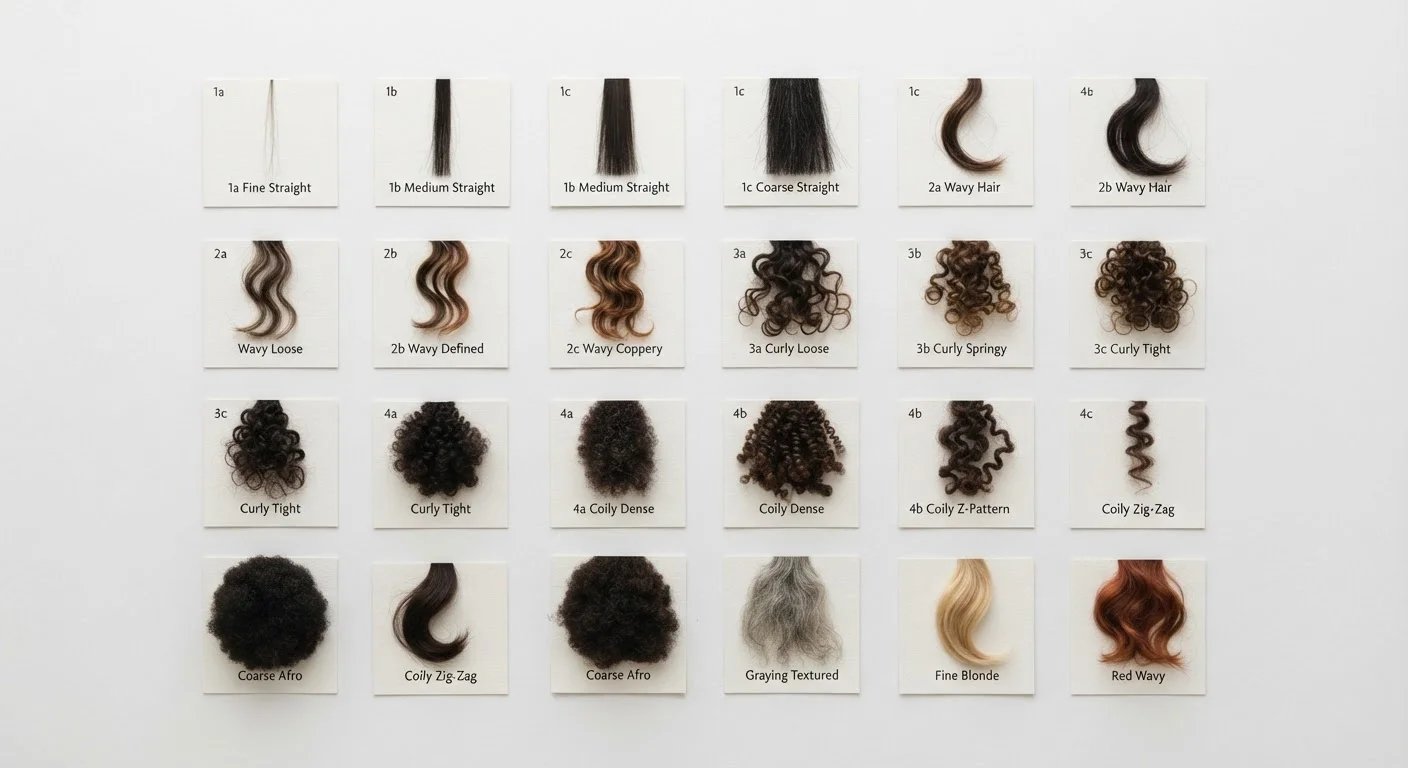
Most people learn their hair's curl pattern — straight, wavy, curly, or coily — and stop there. But curl pattern alone tells you very little about what your hair actually needs. Two people with the same curl pattern can have completely opposite responses to the same shampoo, conditioner, or styling cream. The reason usually comes down to porosity, texture, and density — the three properties that govern how your hair behaves day to day.
Understanding them doesn't require a trichologist or an expensive consultation. It requires knowing what to look for and how to interpret what you see. Once you have that information, you can make product and routine decisions based on your actual hair rather than trial and error.
One Head, Multiple Profiles
It's entirely normal to have different porosity levels along the same strand — your roots may be low-porosity while your ends, which are older and more exposed to styling, are high-porosity. Similarly, some people have finer strands at the temples and coarser strands at the back of the head. Thinking in zones rather than a single uniform profile helps you make more targeted decisions.
Porosity: How Well Your Hair Holds On to Moisture
Porosity describes how easily water and other substances enter and exit the hair shaft. The outermost layer of each strand, called the cuticle, is made up of overlapping scales. When those scales lie flat and tight, moisture has a harder time getting in — but also a harder time escaping. When they're raised or damaged, moisture enters easily but leaves just as fast.
- Low porosity: Cuticles are tightly closed. Products tend to sit on the surface rather than absorb. Hair takes a long time to get fully wet and a long time to dry. Lightweight products applied with gentle heat (a warm towel or hooded dryer) help open the cuticle temporarily.
- Medium (normal) porosity: The cuticle allows moisture in and out at a balanced rate. This hair type tends to hold styles well and respond predictably to most products.
- High porosity: Cuticles are raised or have gaps, often due to chemical processing, heat damage, or genetics. Hair absorbs moisture quickly but loses it just as fast — leading to chronic dryness and frizz. Heavier creams and sealants help lock moisture in.
For a deeper look at how heat tools and chemical treatments affect porosity over time, see our overview of styling method trade-offs.
Texture: The Width of Each Individual Strand
Hair texture is about strand diameter — how thick or thin each individual hair is. The classic reference point is a sewing thread: fine hair is thinner than thread, coarse hair is thicker, and medium hair is roughly the same width.
You can test yours by rolling a single strand between your fingers. Fine hair is almost imperceptible; coarse hair feels substantial and sometimes wiry. Fine strands have fewer cuticle layers, which means they're more susceptible to damage from heat and chemical processes. Coarse strands are structurally more resilient but may resist moisture absorption and can feel dry or rough if not properly conditioned.
Test Your Texture Without Guessing
Pull a single, clean strand from your brush and hold it up to the light. Lay it alongside a piece of standard sewing thread. If the strand is noticeably thinner, you likely have fine texture; if it's visibly thicker or similar in width, you're in the medium-to-coarse range. Doing this with a few strands from different areas of your head gives you a more accurate picture, since texture can vary slightly across the scalp.
Texture also influences how your hair responds to protein treatments. Fine hair can become stiff and brittle with too much protein, while coarse hair often tolerates or benefits from it. Getting this balance wrong is one of the most common causes of unexpected breakage.
Density: How Much Hair You Actually Have
Density measures the number of strands per square inch of scalp — not the thickness of each strand. This distinction matters because it's easy to confuse the two. You can have very fine hair at high density (lots of thin strands, which may look full) or very coarse hair at low density (fewer thick strands, which may look sparse despite feeling substantial).
To assess your density, look at your scalp in a mirror without parting your hair. If you can see your scalp easily, density is likely low. If it's difficult to see your scalp at all, density is probably high. Medium density falls somewhere in between.
80,000–120,000
Approximate total strands on an average adult scalp
According to general trichology references, follicle count varies widely between individuals and is largely genetically determined.
~50–100
Strands shed daily as part of normal hair cycling
The American Academy of Dermatology notes that losing up to 100 strands per day is considered within the normal range for most adults.
3 categories
Standard hair texture classifications
Fine, medium, and coarse are the widely used industry classifications for strand diameter, each responding differently to heat, products, and chemical services.
Density affects how you apply products and style your hair. High-density hair may need more product to achieve even coverage, while low-density hair benefits from volumizing approaches and careful layering to avoid weighing strands down. Some daily habits — like how tightly you style or how you handle wet hair — can quietly affect density over time. The habits that gradually undermine hair health are worth reviewing alongside this foundation.
Reading the Full Picture Together
The real value of these three properties comes from reading them together. Consider two people with tightly coiled hair: one may have fine strands at high density with high porosity, while the other has coarse strands at low density with low porosity. Their curl patterns look similar, but the first person needs lightweight, moisture-sealing products applied frequently, while the second needs heavier penetrating conditioners used less often.
Similarly, just as knowing your skin type shapes your skincare routine, knowing your hair profile shapes which ingredients and techniques actually serve your hair. Understanding your scalp's condition adds another layer to this picture — see our article on scalp health and what research actually supports for that perspective.
You don't need to overhaul everything at once. Start with porosity — it typically has the biggest practical impact on your routine — then layer in texture and density observations as you go. Small, informed adjustments almost always outperform expensive product overhauls.
This article is for general informational and educational purposes only. For concerns about hair loss, scalp conditions, or significant changes in hair health, consult a qualified dermatologist or trichologist.
Frequently Asked Questions
Drop a clean, product-free strand into a glass of room-temperature water. If it sinks quickly, porosity is likely high. If it floats for several minutes, porosity is probably low. A strand that slowly descends sits in the middle-porosity range. This is a rough guide, not a clinical measurement.
Yes. Chemical treatments, heat styling, UV exposure, and even hard water can raise porosity by lifting or damaging the cuticle. New growth will reflect your natural porosity, while previously treated sections may differ. It's common to have multiple porosity zones along a single strand.
Hair texture refers to the diameter of an individual strand — fine, medium, or coarse. Hair type typically refers to curl pattern, often described with a numerical and letter system (e.g., 2A, 4C). They're related but independent: a person can have coarse, tightly coiled hair or fine, loosely wavy hair.
It can. High-density hair tends to trap oil and product at the scalp more easily, which may mean more frequent cleansing. Low-density hair may be more prone to looking limp after heavy product use, so lighter formulas and less-frequent washing often suit it better.
Largely yes — curl pattern, strand diameter, and follicle density are primarily determined by genetics. However, environmental factors and hair care habits significantly affect how those properties express themselves over time, particularly porosity.
Always test on a clean, dry strand that's free of styling products. Product residue or existing moisture will interfere with the result, making hair that's actually low-porosity appear to absorb water faster than it naturally would.
The content on this site is for informational purposes only and is not a substitute for professional advice. Always consult a qualified professional for guidance specific to your situation.