

What a Vehicle History Report Actually Contains
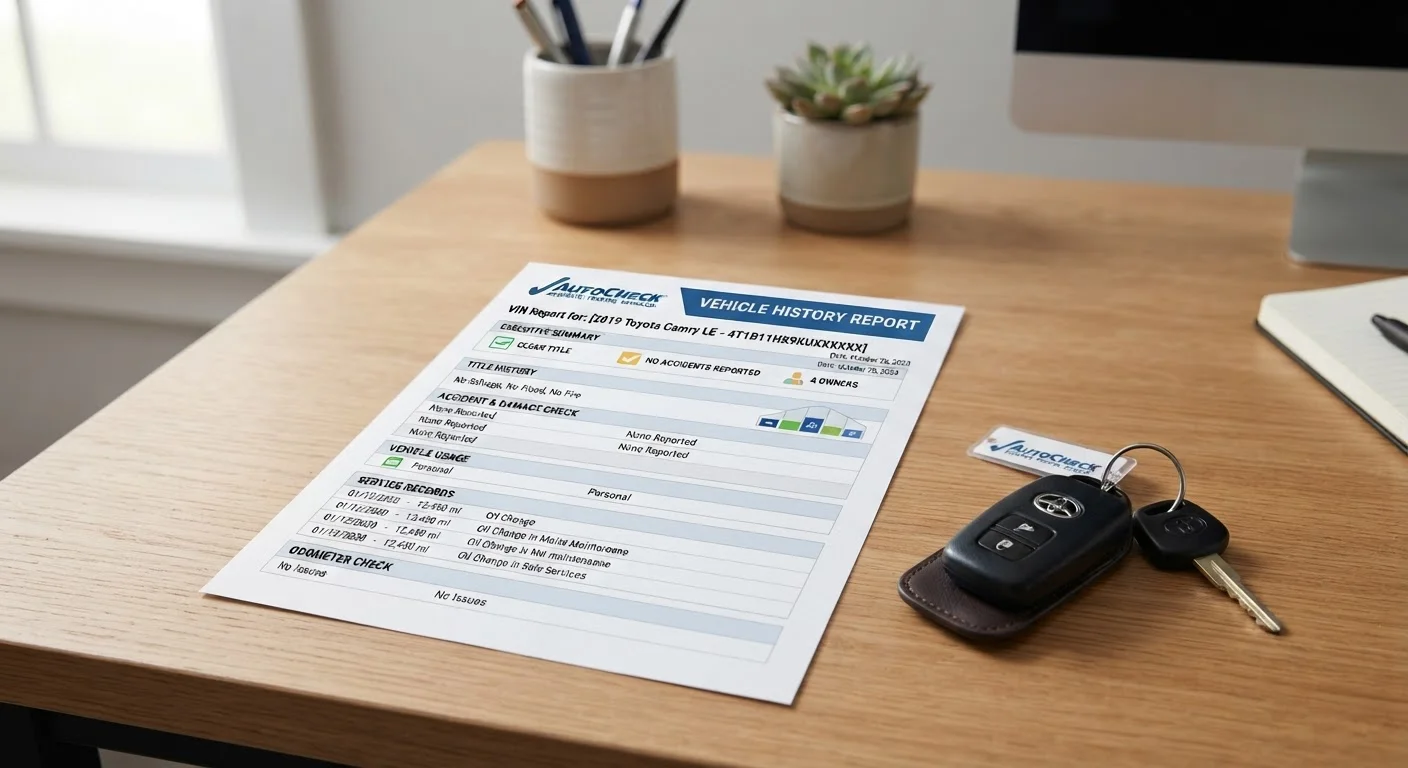
Vehicle history reports - most commonly pulled from databases that aggregate data from DMVs, insurance companies, auction houses, and service centers - compile dozens of data points about a used car's past. At a glance, the volume of information can be overwhelming. But the report has a logical structure once you know how to read it.
Most reports are organized into several major categories: title and ownership history, accident and damage records, odometer readings, service and inspection records, and use-type designations (such as rental, fleet, or lease). Not every section carries equal weight, and not every flag means the same thing. As part of the full car-buying journey, learning to interpret these sections correctly can save you from costly mistakes.
What you will need
The Entries That Deserve the Most Scrutiny
Certain entries in a vehicle history report warrant your full attention. Understanding which ones to prioritize helps you cut through the noise quickly.
Branded Titles Require Extra Due Diligence
If a vehicle carries a salvage, rebuilt, or flood title, standard used-car evaluation steps are not sufficient. You should have the vehicle inspected by a mechanic experienced with post-accident or flood-damaged vehicles, and consult with your insurance provider before purchase. Some insurers limit or decline coverage on vehicles with certain title brands, which can significantly affect your ownership options.
Title Brands
A title brand is a permanent designation attached to a vehicle's official title. Brands like salvage, rebuilt, flood, fire, or lemon law buyback are serious flags. A salvage title means an insurance company deemed the vehicle a total loss at some point. A rebuilt title means it was repaired and reinspected afterward - but quality varies significantly depending on who did the work. These designations can affect insurability, resale value, and long-term reliability. The presence of a branded title doesn't automatically disqualify a car, but it demands much deeper investigation.
Structural or Airbag Damage
Reported accidents vary widely in significance. A minor rear-end fender scrape is very different from a collision that triggered airbag deployment or caused frame damage. Look specifically for entries that mention structural damage, major damage, or deployed airbags - these point to high-severity events that may have lasting mechanical implications even after professional repair.
Odometer Discrepancies
If mileage readings appear out of sequence across different report entries - for example, a later inspection showing lower mileage than an earlier one - that is a significant red flag for odometer rollback, which is illegal under federal law. Confirm that the mileage progression follows a consistent upward trend throughout the report.
Entries That Are Usually Routine
Many report entries that initially look alarming are actually unremarkable. A reported minor accident with no damage indicated often reflects a low-speed parking lot scrape that was documented for insurance purposes but caused no real harm. Similarly, multiple ownership transfers are normal for older vehicles and don't automatically indicate problems.
Service records - oil changes, tire rotations, scheduled maintenance - are positive data points. A car with consistent documented service history at dealerships or shops is generally better cared-for than one with no records at all. Gaps in service records aren't automatically disqualifying, but they do leave questions unanswered. Pair this with your owner's manual guidance to understand what maintenance the vehicle should have received at each mileage interval.
More Records Are Usually Better
A vehicle with a long history of documented service entries - even from multiple shops across multiple states - is generally more reassuring than one with sparse or missing records. Consistent documentation suggests engaged, attentive ownership. Gaps don't always mean neglect, but they do mean you're working with incomplete information.
How to Use the Report Alongside Other Tools
A vehicle history report is an important layer of due diligence, but it has real limitations. Reports only reflect what was officially documented and reported - unreported accidents, cash repairs, and private-party service work often leave no trace. That's why using the report as a starting point, not a final verdict, is essential.
Always pair a clean or acceptable report with a pre-purchase inspection by an independent mechanic. A trained eye can spot signs of past repair, hidden rust, or mechanical wear that no database will ever capture. And once you've purchased a vehicle, a pre-trip vehicle check helps you stay ahead of problems going forward. History data and physical inspection work together - neither replaces the other.
Obtain the Report Using the VIN
Locate the vehicle's Vehicle Identification Number (VIN) - a 17-character code found on the driver's side dashboard (visible through the windshield), the driver's door jamb sticker, and on the title and registration documents. Enter this number into one of the widely available vehicle history report services to pull the full report.
Review the Title History First
Go directly to the title and ownership section. Check for any branded titles (salvage, rebuilt, flood, fire, lemon). Note the number of previous owners and the states in which the car was registered. Vehicles that moved through states with high humidity or heavy road-salt use may have elevated rust risk.
Assess the Accident and Damage Records
Read each accident entry carefully. Note whether the report specifies minor, moderate, or severe damage, and whether structural damage or airbag deployment is mentioned. For each incident, check whether subsequent service records indicate repair work was performed.
Check the Odometer Readings in Sequence
Scan all mileage entries chronologically. The numbers should increase consistently over time. Any entry showing a lower mileage than a prior entry is a serious inconsistency that warrants direct questioning of the seller and further verification.
Evaluate the Service and Inspection Records
Look for evidence of regular maintenance - oil changes, state inspections, and scheduled services. A documented service history indicates the prior owner(s) took upkeep seriously. Cross-reference mileage intervals with the maintenance schedule outlined in the owner's manual for that vehicle's make and model year to understand what should have been done.
Flag Open Questions and Bring Them to an Inspection
After reviewing the full report, write down any entries you found unclear, inconsistent, or concerning. Bring these specific questions to your independent mechanic during a pre-purchase inspection. The report tells the documented story; the mechanic can assess the physical reality.
The content on this site is for informational purposes only and is not a substitute for professional advice. Always consult a qualified professional for guidance specific to your situation.