

Our Verdict
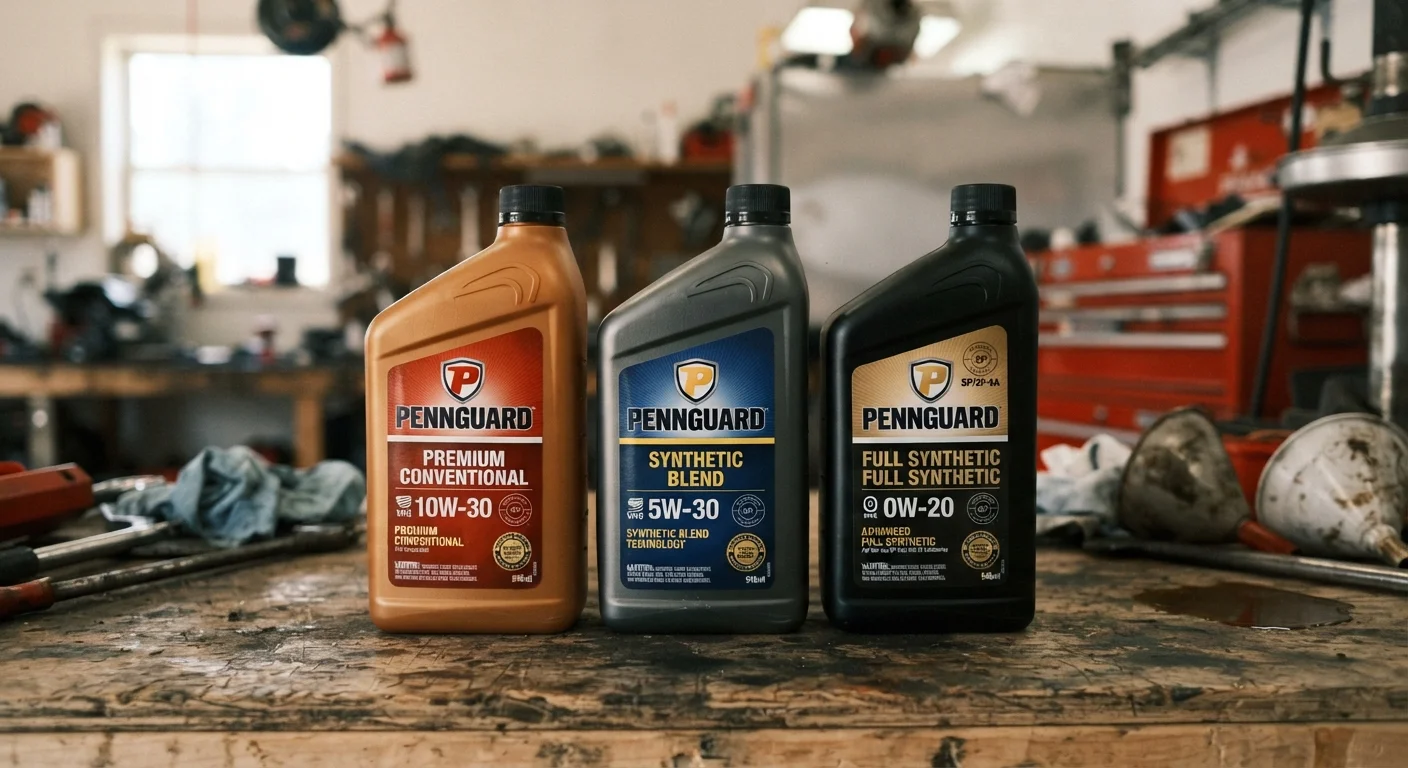
No single oil type is universally superior - the right choice depends on your vehicle's specifications, driving conditions, and mileage. Newer vehicles and those driven in extreme conditions typically benefit from full synthetic, while older or low-stress engines may perform perfectly well on conventional oil. Synthetic blends offer a cost-effective upgrade for drivers who want more protection than conventional without paying the full synthetic premium.
| Best for | Recommended |
|---|---|
| Older vehicles with low-mileage, city driving, and manufacturer approval | Conventional Oil |
| Trucks, SUVs, and vehicles used for towing, hauling, or mixed driving | Synthetic Blend |
| Modern engines, turbocharged vehicles, and extreme-climate driving | Full Synthetic |
What Actually Differentiates These Three Oil Types
Motor oil - regardless of type - serves the same core functions: lubricating moving engine components, reducing heat, suspending contaminants, and preventing corrosion. What separates conventional, synthetic blend, and full synthetic oils is how they're made and how consistently they perform across a range of temperatures and stress conditions.
Conventional oil is refined directly from crude petroleum. It performs reliably under normal operating conditions but contains naturally occurring impurities that limit its stability at temperature extremes. It degrades faster than synthetic alternatives and typically requires more frequent changes.
Full synthetic oil is engineered in a lab from chemically modified base stocks. The molecular structure is more uniform, which translates to better viscosity stability across hot and cold extremes, slower oxidation, and longer change intervals. Most modern passenger vehicles - especially those with turbocharged engines - are factory-filled with full synthetic for exactly these reasons.
Synthetic blend oil mixes conventional base oil with synthetic base stock and an additive package. It offers a performance step up from conventional - particularly in temperature resilience and oxidation resistance - without the full synthetic price point. It's a common factory recommendation for light trucks and SUVs.
See our guide to fluids under the hood for a broader look at what each reservoir in your engine bay does.
Side-by-Side: How Each Oil Type Performs
The table below compares the three oil types across the criteria most relevant to everyday drivers. Keep in mind that specific performance varies by brand formulation and viscosity grade - always cross-reference your owner's manual.
| Conventional | Synthetic Blend | Full Synthetic | |
|---|---|---|---|
| Base stock | Refined crude petroleum | Mix of conventional and synthetic | Chemically engineered base stock |
| Temperature stability | Moderate | Good | Excellent |
| Typical change interval | 3,000-5,000 miles | 5,000-7,500 miles | 7,500-15,000 miles |
| Relative cost per quart | Lowest | Moderate | Highest |
| Oxidation resistance | Lower | Moderate | High |
| Common applications | Older, low-demand engines | Light trucks, SUVs, mixed driving | Modern, turbo, or performance engines |
| Cold-start performance | Adequate | Good | Best |
When Each Type Makes Practical Sense
Understanding the specs is one thing - knowing when to apply them is another.
Conventional Oil
If your vehicle is older, has a simpler naturally-aspirated engine, and your manufacturer specifies conventional oil, it remains a sound choice - provided you change it on schedule. Running extended intervals on conventional oil accelerates sludge buildup, which can restrict oil flow to critical engine components.
Synthetic Blend
Drivers who regularly haul cargo, tow trailers, or run their vehicles hard in varying conditions often find synthetic blend a practical upgrade. It handles the added thermal stress better than conventional without the cost of going fully synthetic. Many pickup trucks leave the factory with a synthetic blend recommendation for exactly this reason.
Full Synthetic
Turbocharged engines, direct-injection engines, and vehicles with variable valve timing systems all generate conditions - higher heat, tighter tolerances - where full synthetic earns its price premium. If your vehicle's manufacturer specifies full synthetic, using conventional or even a blend may void warranty protections and risk long-term engine wear.
Always Match Viscosity Grade First
Before choosing between oil types, confirm the viscosity grade specified in your owner's manual - for example, 5W-30 or 0W-20. Viscosity affects how oil flows at startup and at operating temperature, and using the wrong grade can increase engine wear regardless of whether the oil is conventional or full synthetic. The oil type choice comes after viscosity is locked in.
The car maintenance myths article covers why the 3,000-mile oil change rule no longer applies to most drivers - a common misconception directly tied to oil type.
High-Mileage Engines and Switching Oil Types
One frequently misunderstood scenario involves switching an older, high-mileage engine - one with over 75,000 miles - from conventional to full synthetic. The concern is not that full synthetic is harmful, but that its enhanced detergency can loosen accumulated deposits that were effectively sealing minor gasket seams or worn surfaces. In some cases, this leads to minor leaks that weren't present before.
High-mileage formulations - a separate product category - address this by including seal conditioners and slightly different additive packages. If you're considering a switch on an older engine, consulting a qualified mechanic is a reasonable precaution before changing oil types.
Don't Switch Oil Types Without Checking First
If your vehicle has accumulated significant mileage on conventional oil, switching abruptly to full synthetic without inspection can occasionally surface pre-existing issues. This doesn't mean full synthetic is harmful - it means the engine's condition should inform the decision. Have a mechanic assess gasket integrity and overall engine health before making the switch on high-mileage vehicles.
Whether you handle oil changes yourself or use a shop matters too. Our comparison of DIY oil changes vs. professional service walks through the tradeoffs on both sides. And if you're weighing broader maintenance decisions, the honest tradeoffs of DIY car maintenance piece covers the bigger picture.
The One Rule That Overrides Everything Else
No comparison chart or general guideline should override your owner's manual. Automakers specify an oil viscosity grade (such as 5W-30 or 0W-20) and, increasingly, a minimum performance standard (such as API SN Plus or ILSAC GF-6) for a reason - it reflects the actual engineering tolerances and lubrication demands of your specific engine.
Using an oil that meets or exceeds your manufacturer's specification in both viscosity and performance standard is the floor, not the ceiling. Going above specification (for example, using full synthetic in an engine that only requires conventional) won't harm your engine, but it's not required to protect it. Going below specification - using a lower-grade oil to save a few dollars - is where real risk accumulates over time.
This article is for general informational purposes only. Always consult your vehicle's owner's manual and a qualified mechanic for maintenance decisions specific to your engine and driving conditions.
The content on this site is for informational purposes only and is not a substitute for professional advice. Always consult a qualified professional for guidance specific to your situation.