

Our Verdict
Road rage is a predictable psychological pattern that can be interrupted at multiple points - before you start driving, in the moment a conflict begins, and as it threatens to escalate. While no driver can fully control the behavior of others, understanding how aggression builds and choosing disengagement over retaliation dramatically reduces your risk of becoming a statistic.
Any driver who regularly commutes in high-traffic conditions, has experienced confrontational incidents, or wants to build calmer, safer habits behind the wheel.
The Psychology Behind Road Rage
Driving feels personal. The car around you creates a sense of territory, and when another driver cuts you off or tailgates aggressively, the brain interprets it as a direct threat or sign of disrespect - even if the other driver barely noticed you. This is sometimes called attribution error: we assume the worst about others' motives while excusing our own mistakes as circumstantial.
Add in the anonymity of being inside a vehicle, the stress of running late, and the physical discomfort of heavy traffic, and the conditions for anger are almost engineered into the daily commute. Studies in traffic psychology consistently show that feelings of powerlessness and loss of control are primary triggers for aggressive responses. The escalation happens quickly: one horn honk leads to a gesture, a gesture leads to a brake-check, and suddenly two strangers are at risk of a crash - or worse, a physical confrontation.
Understanding that road rage is a predictable stress response - not a character flaw exclusive to other drivers - is the first step toward interrupting the cycle. Defensive driving principles directly address this mindset, emphasizing that you cannot control other drivers, only your own reactions.
How Aggressive Driving Escalates
Most road rage incidents don't begin with violence - they begin with a perceived slight, often something as minor as a delayed green-light response or a lane merge without signaling. What turns annoyance into danger is reciprocation. When one driver responds aggressively and the other matches that energy, each exchange raises the emotional stakes.
80%
Drivers who report experiencing road rage
According to AAA Foundation for Traffic Safety research, approximately 80% of drivers reported significant anger, aggression, or road rage behind the wheel in a given year.
~30
Fatalities annually linked to road rage
The AAA Foundation has estimated that aggressive driving plays a role in roughly 56% of fatal crashes, with dozens of deaths each year attributed directly to road rage confrontations.
Common escalation patterns include tailgating, repeated horn use, flashing headlights, and verbal confrontation at intersections. In more serious cases, drivers have been known to follow one another, block traffic, or exit their vehicles to confront each other physically. Tailgating is especially dangerous because it removes the reaction time needed to avoid a crash - and it signals hostility, which can provoke the driver ahead into unpredictable behavior.
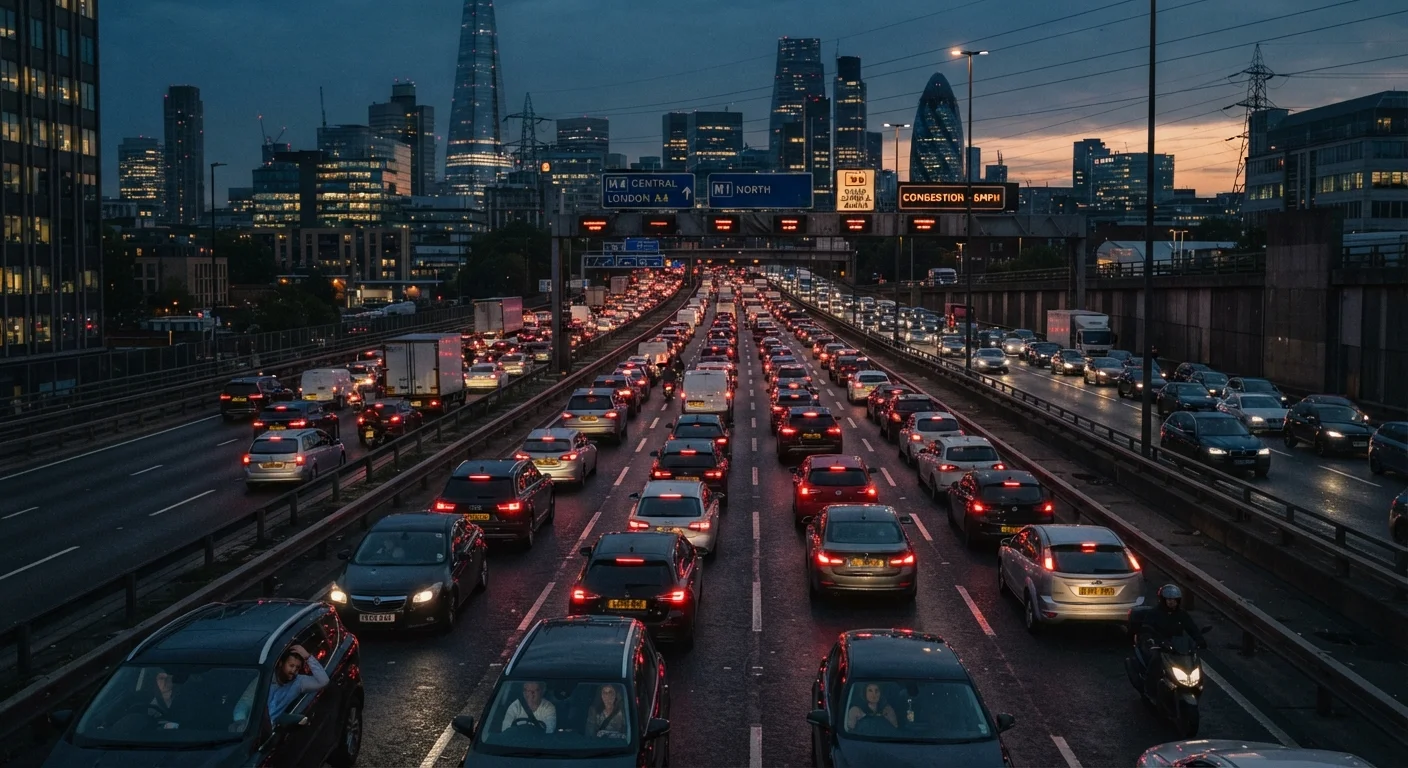
The environment matters too. High-density urban corridors, highway on-ramps, and construction zones - places where space is compressed and movement is restricted - see a disproportionate share of aggressive driving incidents.
Pros of Understanding Road Rage Dynamics
Learning about the mechanics of road rage isn't just academic - it has concrete, protective value for everyday drivers.
Awareness reduces impulsive retaliation
Knowing how escalation works creates a mental buffer between stimulus and reaction. Drivers who recognize the pattern are less likely to respond to a perceived slight with an aggressive countermove.
Early disengagement prevents crashes
Choosing to back off - slowing down, switching lanes, or taking an alternate route - removes you from the conflict entirely. The majority of road rage incidents end without injury when one party disengages first.
Self-knowledge helps manage personal triggers
Understanding what conditions make you more prone to frustration - running late, heavy traffic, lack of sleep - lets you take preemptive steps like leaving earlier or adjusting your route.
Calmer driving protects passengers too
Maintaining composure behind the wheel models safe behavior for passengers, including children, and keeps attention where it belongs: on the road.
Drivers who understand escalation patterns are better positioned to recognize when a situation is shifting from frustration to danger. That awareness creates a mental pause before an impulsive reaction. For new drivers especially, building this self-awareness early pays long-term dividends - see how foundational habits are formed in our guide to road safety for new drivers.
Cons: Why Road Rage Risks Are Hard to Fully Avoid
Even the calmest, most prepared driver faces genuine limitations when another person is behaving aggressively.
You can't control other drivers' behavior
No level of personal calmness prevents another driver from targeting you with aggression. You can only control your own response, which sometimes feels insufficient when facing a genuinely threatening driver.
Disengaging isn't always physically easy
In dense traffic, there may be no immediate lane to change into or exit to take. Being stuck adjacent to an aggressive driver removes the most effective de-escalation tool: physical distance.
Stress accumulates across a commute
Even a driver who starts the trip calm can find composure eroded by cumulative small frustrations - slow-moving traffic, near-misses, construction delays - making composed responses harder later in the journey.
Bystanders rarely intervene
In a road rage situation, other drivers typically do not step in, and calling police during an active, moving conflict has practical limits. This can leave the targeted driver feeling isolated.
The unpredictability of other drivers is perhaps the most sobering reality. No amount of personal composure guarantees you won't become the target of someone else's aggression. Driving conditions - particularly the differences between highway and city environments - also shape how much room you have to maneuver away from a conflict.
If You Feel Threatened: Do Not Engage
If another driver is following you, blocking your path, or displaying a weapon, do not exit your vehicle and do not drive home. Drive to the nearest police station, fire station, or busy public area and call 911. Law enforcement agencies consistently advise that physical confrontations following road rage incidents carry serious injury risk for everyone involved. Your safety takes priority over any outcome of the conflict.
Practical Steps to De-Escalate or Disengage
When an aggressive situation arises, your priority is to exit the interaction, not win it. Here's what that looks like in practice:
- Don't make eye contact. Direct eye contact can be read as a challenge. Keep your gaze on the road ahead.
- Avoid retaliatory gestures. Even a dismissive wave can feel provocative to an already-angry driver.
- Create physical distance. Change lanes, slow down, or take an exit if necessary. Putting space between you and an aggressive driver removes most of the risk.
- Don't stop in an isolated area. If a driver is following you, drive to a populated location - a gas station, a shopping center, or a police station - before stopping.
- Call 911 if you feel threatened. If another driver is behaving in a way that makes you fear for your safety, contact law enforcement rather than engaging.
Before you even get in the car, managing your stress level matters. Leaving earlier, listening to calming audio, and setting realistic travel expectations all reduce the baseline frustration that makes escalation more likely. Drivers at different life stages may have different stress triggers - road safety risks shift with age and so does emotional regulation behind the wheel.
The content on this site is for informational purposes only and is not a substitute for professional advice. Always consult a qualified professional for guidance specific to your situation.