

Start here
Picking Your Route and Destination
Next
Getting Your Vehicle Road-Trip Ready
Then
Planning Where to Sleep Along the Way
Almost there
Staying Safe on Long Drives
Final prep
Packing Smart for the Road
Picking Your Route and Destination
Great road trips start with a clear mental picture: Where are you actually going, and how much time do you have to get there? For first-timers, the temptation is to map a sweeping cross-country odyssey — resist it. A focused route with a compelling endpoint is far more satisfying than an ambitious one that leaves you driving in the dark every night.
Choose a destination that genuinely excites you, then work backward. Plug your start and end points into a mapping tool and note the total drive time. Divide that by the number of days you have, aiming for no more than 5–6 hours of driving per day. That math will reveal how many stops you need and where they naturally fall.
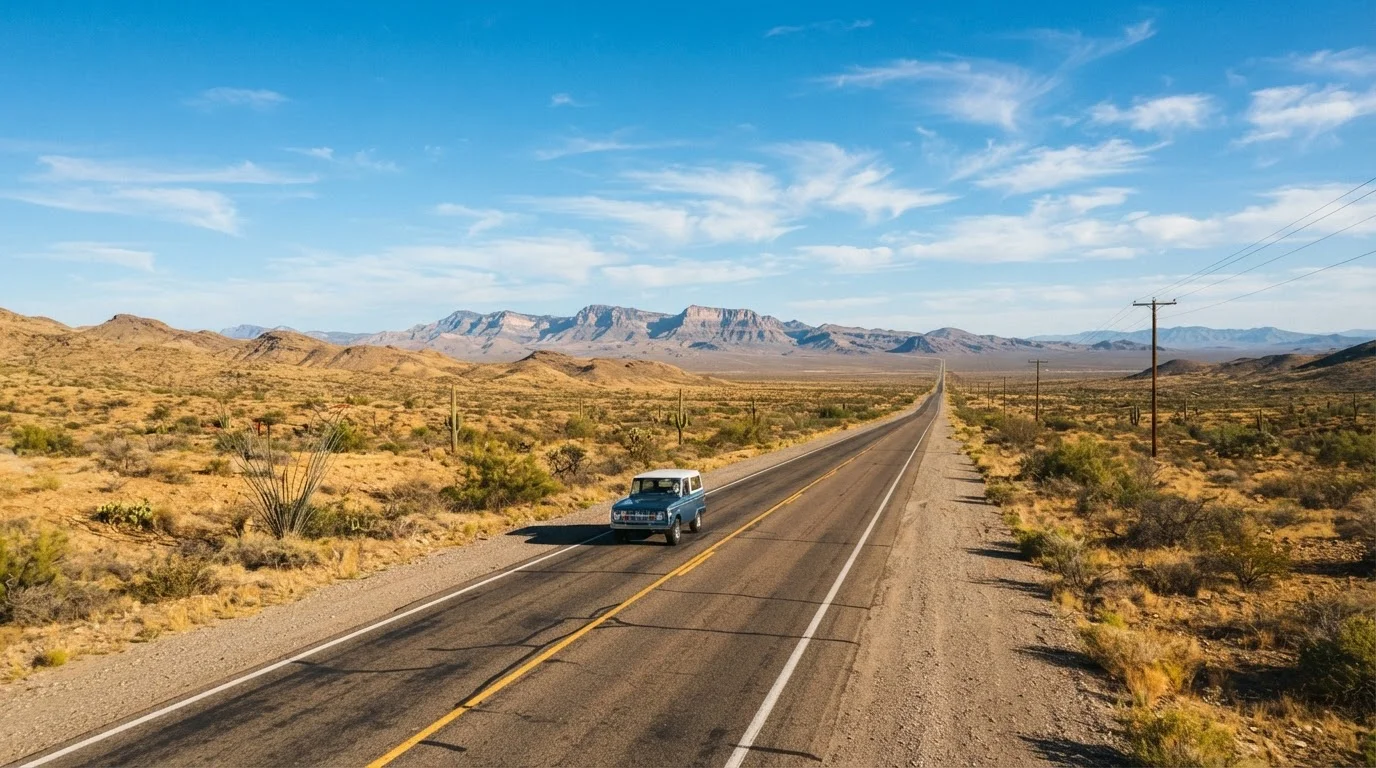
Think about what kind of scenery and experiences you want along the way. If wide-open desert landscapes appeal to you, the American Southwest is a perennial first-timer favorite. If national parks are the draw, check our overview of common national park planning mistakes — permits and entrance reservations can sell out months ahead. For broader destination research techniques, see our guide on how to research a place you know nothing about.
Daily driving distance
The number of miles you plan to cover in a single day of driving. Keeping this realistic — typically under 350 miles for first-timers — prevents fatigue and leaves time to actually enjoy stops.
Offline maps
Map data downloaded to your phone before the trip so navigation works without a cellular signal. Essential for rural routes where coverage drops out.
Roadside emergency kit
A collection of supplies kept in the car to handle common breakdown or accident situations — including jumper cables, a flashlight, reflective triangles, and basic tools.
Buffer day
A day built into your itinerary with no fixed driving plan. It absorbs delays, lets you linger somewhere unexpected, or provides a genuine rest day mid-trip.
Tread depth
How much rubber remains on your tires' surface pattern. Low tread reduces grip — especially in rain — and is a key safety item to check before a long drive.
Getting Your Vehicle Road-Trip Ready
Your car is the trip. A breakdown in an unfamiliar area is stressful and costly, but most mechanical surprises are preventable with a systematic check before you leave the driveway.
At minimum, inspect or have a mechanic check: tire pressure and tread depth, engine oil and coolant levels, brakes, windshield wipers, and all exterior lights. If your car is due for an oil change within the mileage you're planning to drive, do it before you leave — not after. Check that your spare tire is inflated and that you know where the jack and lug wrench are stored.
Our detailed pre-trip vehicle inspection walkthrough covers exactly what to look at and why each item matters. Don't skip it — a 30-minute check can prevent a multi-hour roadside delay.
Schedule Your Mechanic Before You Pack
Book a basic vehicle inspection at least a week before your departure date — not the day before. Mechanics near popular departure weekends fill up fast, and you want time to address anything flagged without rushing. Even a clean bill of health gives you real peace of mind on the road.
Planning Where to Sleep Along the Way
Lodging strategy is where first-timers often either over-plan (booking every single night months in advance) or under-plan (assuming rooms will always be available). The sweet spot is a hybrid approach.
Reserve accommodations for the first and last nights of your trip, plus any nights near popular parks, beaches, or event areas during peak season. Leave the middle nights more flexible — this gives you breathing room to linger somewhere unexpected or push ahead if the drive is going smoothly.
Consider mixing lodging types. Campgrounds offer a low-cost, immersive option and are plentiful along most scenic routes, but reserve spots at national park campgrounds well in advance. Budget motels near highway exits are convenient for simple overnight stops. For urban legs of the trip, a mid-range hotel in a walkable neighborhood can double as its own mini-experience.
National Park Campgrounds Book Up Fast
Popular campgrounds inside national parks — think Yosemite Valley, Zion, and Glacier — often fill up months in advance, especially for summer weekends. Check reservation windows on recreation.gov and set calendar reminders for when booking opens. Nearby gateway towns and national forest campgrounds are often less competitive alternatives worth researching.
Staying Safe on Long Drives
Driver fatigue is one of the most underestimated risks on any road trip. The goal is to treat breaks as part of the plan, not an inconvenience. Stop every 2 hours regardless of how good you feel — get out of the car, stretch your legs, and hydrate. Avoid heavy, carb-laden meals at midday when drowsiness peaks naturally.
Share driving duties with a travel companion if possible, and agree on a rule: whoever is tired says so, no negotiation. If you're solo and genuinely sleepy, pull off safely and rest. A 20-minute nap in a well-lit rest area beats the alternative.
Always download offline maps for your route before leaving — cell coverage can disappear for long stretches in rural areas. Keep your phone charged (a car charger is essential) and share your general itinerary with someone at home. For a full checklist of pre-departure tasks beyond the car itself, see our pre-trip checklist covering everything from mail holds to emergency contacts.
Know the road safety basics for your specific route, especially if it involves mountain passes, desert heat, or winter conditions. Our hub on road safety for all drivers has practical guidance for varied driving environments.
Packing Smart for the Road
Road trip packing has one big advantage over flying: you're not fighting with overhead bin space. But unlimited trunk room is also a trap — it's easy to overpack and spend every stop hauling luggage in and out of the car.
Use a single large duffel or rolling bag per person, plus one shared car kit stocked with: a first-aid kit, jumper cables, a flashlight, reflective road triangles, a basic tool kit, bottled water, non-perishable snacks, and a paper map of your region as a backup. Keep the car kit accessible — not buried under luggage.
Pack a small personal day bag with what you'll actually want during the drive: chargers, sunglasses, a neck pillow, entertainment for passengers, and anything you'd need at a gas station stop without digging through the trunk. Organize your trunk so frequently accessed items are on top.
For a broader look at what to handle before any trip departs, the ground-up trip planning primer is worth a read if this is your very first time organizing travel from scratch.
Don't Rely Solely on Your Phone for Navigation
Smartphones lose signal in mountains, deserts, and rural corridors — exactly the scenic routes most road trippers love. Always download your route for offline use before leaving, and keep a physical or printed regional map as a true backup. Running out of navigation mid-drive in an unfamiliar area is far more stressful than the two minutes it takes to prepare.
Frequently Asked Questions
Most first-timers do best keeping daily driving to around 300–350 miles, which translates to roughly 5–6 hours behind the wheel. This leaves room for stops, meals, and unexpected detours without arriving exhausted. Build buffer days into longer trips whenever possible.
It depends on your route and season. Popular stretches near national parks or coastal highways fill up fast in summer, so reserving at least a few nights ahead is wise. For more rural routes in the off-season, you'll often find walk-in availability, but having backup options researched saves stress.
At minimum: a charged phone, physical backup map or downloaded offline maps, jumper cables, a flashlight, basic first-aid kit, water, snacks, and a roadside emergency kit including reflective triangles. Always carry your insurance card, vehicle registration, and a contact number for your roadside assistance plan.
Both work, but each has trade-offs. Your own car is familiar and free of mileage fees, but maintenance responsibility falls entirely on you. A rental can offer newer safety features and roadside support, but mileage caps and fuel policies add cost. Review your personal auto insurance or credit card coverage before renting.
The most effective approach is to stop every 2 hours, even briefly — walk around, get fresh air, and hydrate. Avoid heavy meals that cause drowsiness, and switch drivers if you're traveling with someone. Caffeine helps short-term but is not a substitute for real rest; if you feel genuinely sleepy, pull over safely and nap.
Start with a mapping tool to identify towns at natural stopping distances, then check traveler review platforms, state tourism sites, and national park resources for highlights. Our guide on <a href="/travel/trip-planning/how-to-research-a-destination-you-know-nothing-about">researching an unfamiliar destination</a> walks through this process step by step.
The content on this site is for informational purposes only and is not a substitute for professional advice. Always consult a qualified professional for guidance specific to your situation.