

Three Terms, Three Different Meanings
Walk into any skincare aisle and you'll find products promising to treat "hyperpigmentation," "dark spots," and "melasma" — sometimes on the same label. Beauty marketing has blurred these terms to the point where many people assume they're interchangeable. They aren't.
Each term describes a different mechanism, a different set of triggers, and — in the case of melasma — a condition that warrants a dermatologist's involvement rather than a shelf solution. Understanding what you're actually dealing with is the first step toward addressing it sensibly.
Hyperpigmentation
A broad term for any skin area that appears darker than surrounding tissue due to excess melanin production. It describes a symptom, not a single condition, and can result from many different triggers.
Melanin
The pigment responsible for the color of skin, hair, and eyes. Melanin is produced by cells called melanocytes; overproduction in localized areas results in hyperpigmentation.
Post-Inflammatory Hyperpigmentation (PIH)
Darkening of the skin that occurs as a response to injury or inflammation, such as a healed acne lesion, insect bite, or cut. It is more common and more pronounced in medium to deeper skin tones.
Melasma
A specific form of hyperpigmentation characterized by larger, symmetrical patches triggered primarily by hormonal changes and UV exposure. It is chronic and prone to recurrence, often requiring professional dermatological management.
Solar Lentigines
Flat, well-defined brown spots caused by cumulative sun exposure and the resulting increase in melanocyte activity. Commonly called "sun spots" or "age spots."
Melanocytes
Specialized skin cells that produce melanin. When stimulated by UV radiation, inflammation, or hormonal signals, they can produce melanin unevenly, leading to dark patches.
If you're also sorting out how your overall skin type influences pigmentation concerns, our guide on understanding your skin type provides useful context.
Hyperpigmentation: The Umbrella Category
Hyperpigmentation is the broadest of the three terms. It simply means any area of skin that has produced more melanin — the pigment that gives skin its color — than the surrounding tissue. The result is a patch or spot that appears darker than baseline skin tone.
Hyperpigmentation is a symptom, not a standalone condition. It can result from:
- Post-inflammatory hyperpigmentation (PIH): Darkening that follows skin trauma — acne, cuts, insect bites, or aggressive treatments. PIH is particularly common in medium and deeper skin tones because those skin types tend to produce more melanin in response to injury.
- Sun damage (solar lentigines): Flat brown spots that develop after years of cumulative UV exposure, most often on the face, hands, and shoulders.
- Hormonal changes: Including melasma, discussed separately below.
- Certain medications: Some drugs — including specific antibiotics and chemotherapy agents — can cause or worsen pigmentation changes. Always discuss medication side effects with a prescribing clinician.
Because hyperpigmentation covers such a wide range of causes, there's no single approach that works for all of it. Identifying the trigger matters more than reaching for a "dark spot" product.
| Type of term | Hyperpigmentation = clinical umbrella; dark spots = colloquial; melasma = specific diagnosis |
| Primary trigger: PIH | Skin inflammation or injury (e.g., acne, cuts) |
| Primary trigger: sun spots | Cumulative UV exposure |
| Primary trigger: melasma | Hormonal changes combined with UV exposure |
| Who gets melasma most often | Pregnant people, hormonal contraceptive users, and those with deeper skin tones (American Academy of Dermatology) |
| When to see a dermatologist | For any pigmentation that persists, spreads, or is suspected to be melasma |
Dark Spots: A Colloquial Shorthand
"Dark spots" is an informal, non-clinical term used loosely to describe localized areas of hyperpigmentation. It appears constantly in beauty marketing because it's relatable and broad — which also makes it imprecise.
In everyday conversation, "dark spots" typically refers to one of two things: post-inflammatory marks left behind by acne (see separating acne fact from fiction for context on breakout-related skin concerns), or sun-induced spots that accumulate with age. Both fall under the hyperpigmentation umbrella.
The key distinction: a dark spot from a healed pimple and a dark spot from decades of sun exposure look similar but form through different pathways. PIH is an inflammatory response; sun spots result from chronic UV-induced melanocyte activity. Knowing which you're dealing with helps you evaluate whether general brightening approaches, consistent sun protection, or a dermatologist consultation is most appropriate.
Sun protection is central to managing either type. For a clear breakdown of sunscreen label terms — including what broad-spectrum coverage actually means — see our plain-language SPF glossary.
Melasma: A Distinct and Often Misunderstood Condition
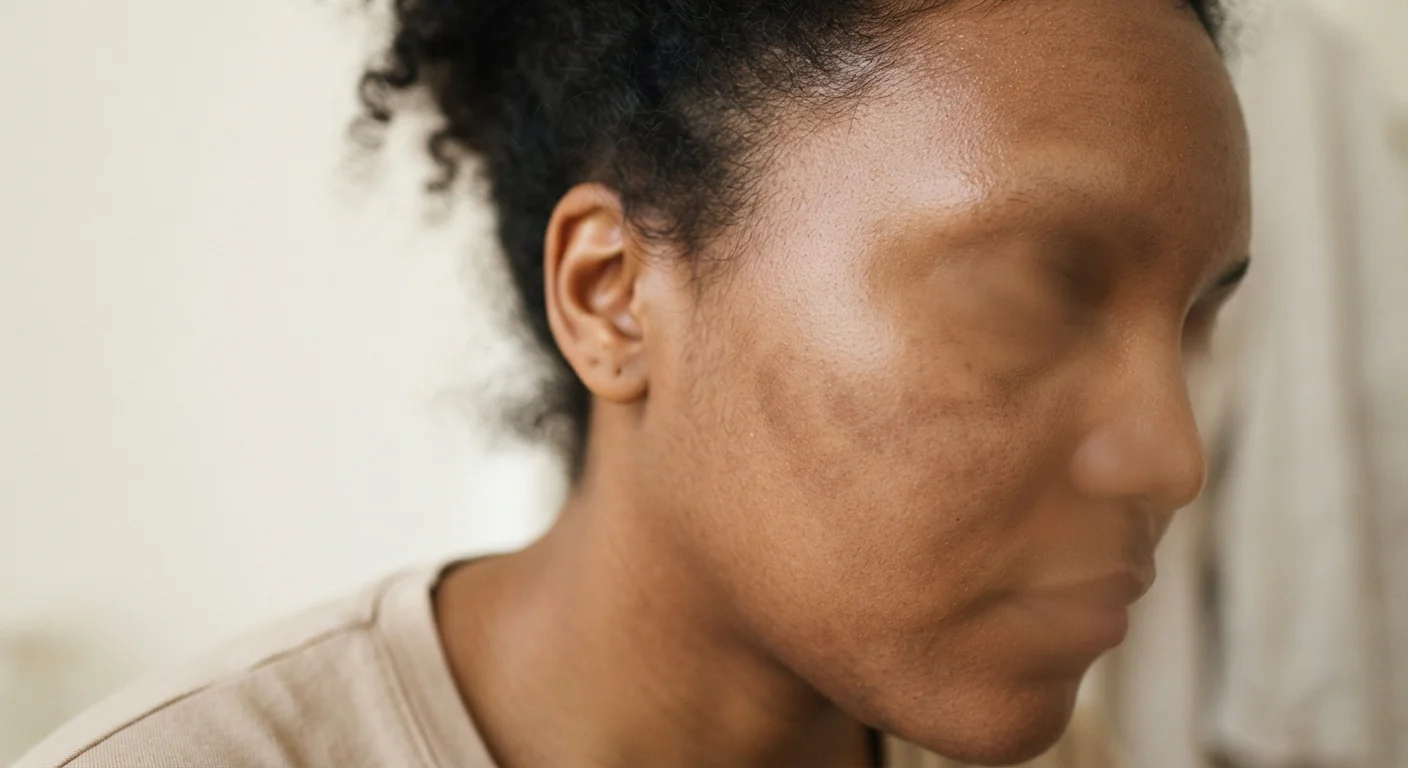
Melasma is a specific form of hyperpigmentation with a distinct pattern and a set of triggers that differ meaningfully from general dark spots. It typically appears as symmetrical, blotchy patches — most often across the cheeks, forehead, upper lip, and chin — and tends to be larger and less sharply defined than post-inflammatory marks or sun spots.
Melasma Is Not Simply "Bad Hyperpigmentation"
Many people try to treat melasma with the same over-the-counter products used for post-acne marks or sun spots, and see limited results. That's because melasma involves deeper pigment deposits and an ongoing hormonal component that topical brighteners alone often can't adequately address. If your pigmentation is symmetrical, covers larger areas of the face, or worsened during pregnancy or while on hormonal contraceptives, bring it up with a dermatologist rather than escalating your product routine.
The primary drivers of melasma are hormonal fluctuation and UV exposure working together. It is significantly more common during pregnancy (sometimes called "the mask of pregnancy"), among people using hormonal contraceptives, and in individuals with naturally deeper skin tones — though it can affect any skin tone.
Melasma is also notably stubborn. Unlike PIH, which often fades over months as inflammation resolves, melasma can persist indefinitely and is prone to recurring even after it appears to have cleared. Over-the-counter brightening ingredients may offer some improvement, but melasma management — particularly for persistent or widespread cases — is best supervised by a board-certified dermatologist. Treatments including topical prescription agents, chemical peels, and laser therapies exist, each with trade-offs that a clinician can help you weigh for your specific skin.
If you're building a nighttime routine around pigmentation concerns, our piece on night cream versus plain moisturizer covers when product category distinctions actually matter. For exfoliation approaches often discussed alongside brightening, the comparison of chemical exfoliation versus physical scrubs explains what each method actually does to skin.
This article is for general informational and educational purposes only and is not a substitute for professional medical or dermatological advice. If you have concerns about skin changes, please consult a qualified healthcare provider.
The content on this site is for informational purposes only and is not a substitute for professional advice. Always consult a qualified professional for guidance specific to your situation.