

What Makes a Capsule Wardrobe Different
Most people's closets grow by accumulation — a sale purchase here, a seasonal impulse there — until getting dressed each morning feels more stressful than it should. A capsule wardrobe inverts that process entirely. Instead of adding items and hoping they work together, you start by defining what you need and choose only pieces that earn a place.
The distinguishing feature isn't a specific item count. It's intentionality. Every piece in a true capsule wardrobe has been chosen because it integrates with the rest — meaning a single item can appear in at least five or six distinct outfits. That interconnection is what separates a capsule from simply owning fewer clothes.
If you're thinking about building your wardrobe from the ground up, the capsule framework is a natural starting point because it prevents the common mistake of buying standalone pieces with no plan for how they'll fit together.
No Universal Item Count Exists
You'll see capsule wardrobe size recommendations ranging from 10 pieces to 50 or more. These numbers reflect different lifestyles, climates, and personal preferences — not an established rule. A person living in a climate with four distinct seasons will need more transitional pieces than someone in a consistently warm region. Build to your actual life, not an idealized template.
The Core Structure: Foundation, Function, and Accent
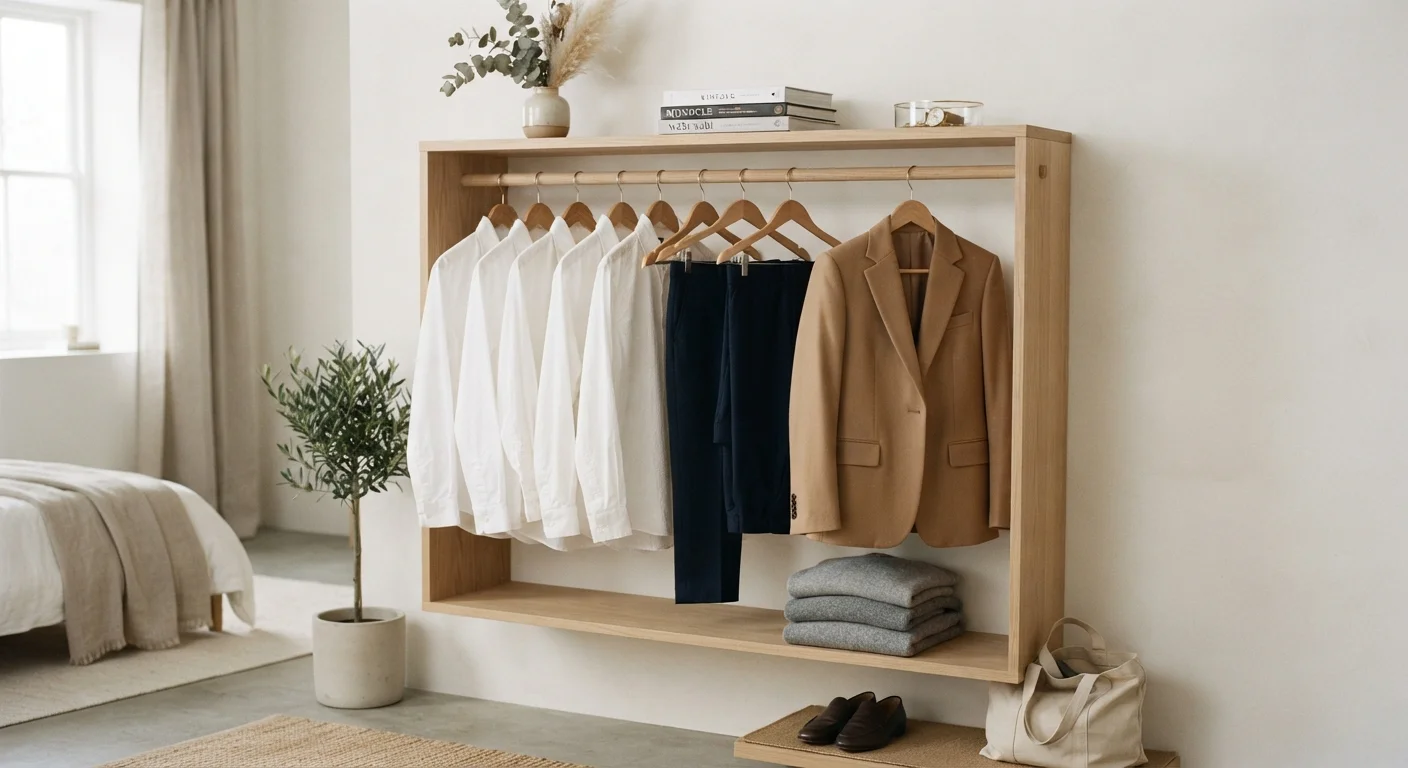
A well-built capsule generally operates on three layers. The foundation consists of neutral, high-wear pieces — think a well-fitted pair of dark jeans, a white button-down, a crewneck sweater, and a versatile jacket. These are the items you reach for constantly and that make everything else combinable.
The functional layer covers situation-specific needs: something appropriate for more formal settings, activewear if your lifestyle calls for it, and seasonally appropriate outerwear. These pieces don't need to mix as freely, but they should still share the color palette of your foundation.
Finally, accent pieces — a printed blouse, a statement trouser, a brighter color — give your wardrobe personality and prevent the foundation from feeling monotonous. The key is keeping this layer small enough that each accent item still pairs with most of your foundation.
For guidance on which specific items consistently deliver the most outfit combinations, see our look at wardrobe staples that actually earn their space.
Start With Color Before Counting Items
Before worrying about how many pieces your capsule should have, settle on a core color palette of three to four neutrals. Once your palette is set, it becomes much easier to evaluate whether any new piece genuinely belongs — if it doesn't work with your existing neutrals, it's unlikely to earn its place.
Why It Works: The Practical Benefits
The most immediate benefit most people notice is reduced decision fatigue. When every item in your closet pairs with most others, choosing an outfit becomes genuinely quick. Research in behavioral psychology has consistently found that an abundance of choices can increase anxiety rather than satisfaction — a smaller, well-curated closet removes that friction.
~30
Average outfits worn from a typical closet
Industry analysts and wardrobe researchers frequently cite estimates suggesting most people regularly wear only about 20–30% of the clothing they own.
5+
Outfit combinations per capsule piece
A common benchmark among style practitioners is that each item in a functional capsule wardrobe should pair with at least five other pieces in the collection.
Financially, the approach tends to shift spending patterns in a useful direction. Instead of frequent small purchases of low-cost trend items that get worn a few times, a capsule wardrobe encourages saving for better-quality pieces that hold up over years. This is not about spending more overall — it's about spending differently. Many people find their annual clothing expenditure drops once they stop replacing worn-out fast fashion repeatedly.
The benefits extend beyond the closet, too. A capsule wardrobe translates directly to easier travel packing. If your pieces already mix freely at home, they'll mix freely in a suitcase. Our carry-on packing guide draws directly on this logic to help you fit a full week's clothing in a single bag.
How to Begin Without Starting Over
The most common mistake is treating a capsule wardrobe as something you build all at once with a fresh budget. In practice, most people already own several pieces that would belong in one — they're simply buried under items that don't coordinate with anything else.
A useful first step is a structured wardrobe audit: pull everything out, assess what you've actually worn in the last year, and identify which pieces genuinely pair with multiple others. Our wardrobe audit guide walks through this process systematically so you can see what you're actually working with before buying anything new.
Once you know your starting point, fill gaps gradually and deliberately. Prioritize pieces that work across seasons — a quality trench coat, a versatile knit, a pair of well-cut trousers — so your wardrobe doesn't require a full overhaul every few months. For practical strategies on seasonal transitions, dressing for the season without rebuilding your wardrobe covers layering and transitional piece selection in detail.
The goal isn't a perfect, Instagram-ready closet. It's a functional, considered one — where getting dressed is straightforward, your clothing reflects your actual life, and nothing in your wardrobe is there by accident.
“A capsule wardrobe is not about having less for the sake of it. It's about having exactly what you need — and knowing how to use all of it.”
— Susie Faux, London boutique owner credited with coining the capsule wardrobe concept in the 1970s
Frequently Asked Questions
Most style practitioners suggest somewhere between 25 and 50 pieces, though this includes shoes and outerwear. The honest answer is that the right number is whatever covers your actual life without excess. Start by assessing what occasions you dress for most days, then work from there.
No. The concept prioritizes thoughtful selection over price. Many people build effective capsule wardrobes from a mix of secondhand finds and budget-friendly basics. The key is choosing durable, versatile pieces rather than cheap trend items that wear out quickly.
Neutral tones — navy, white, grey, black, camel, and olive — tend to combine most freely and remain relevant season to season. The goal is that nearly any top can pair with any bottom in your collection. You can introduce one or two personal accent colors, as long as they work with your core neutrals.
Yes — in fact, a capsule approach is particularly useful for people whose days shift between work, weekend, and social occasions. The trick is to allocate items proportionally to how you actually spend your time rather than building for an idealized life.
They overlap but aren't identical. Minimalist wardrobes emphasize reducing total possessions. A capsule wardrobe emphasizes strategic versatility — you may have a modest number of items, but the goal is outfit utility, not reaching a low item count for its own sake.
The content on this site is for informational purposes only and is not a substitute for professional advice. Always consult a qualified professional for guidance specific to your situation.