

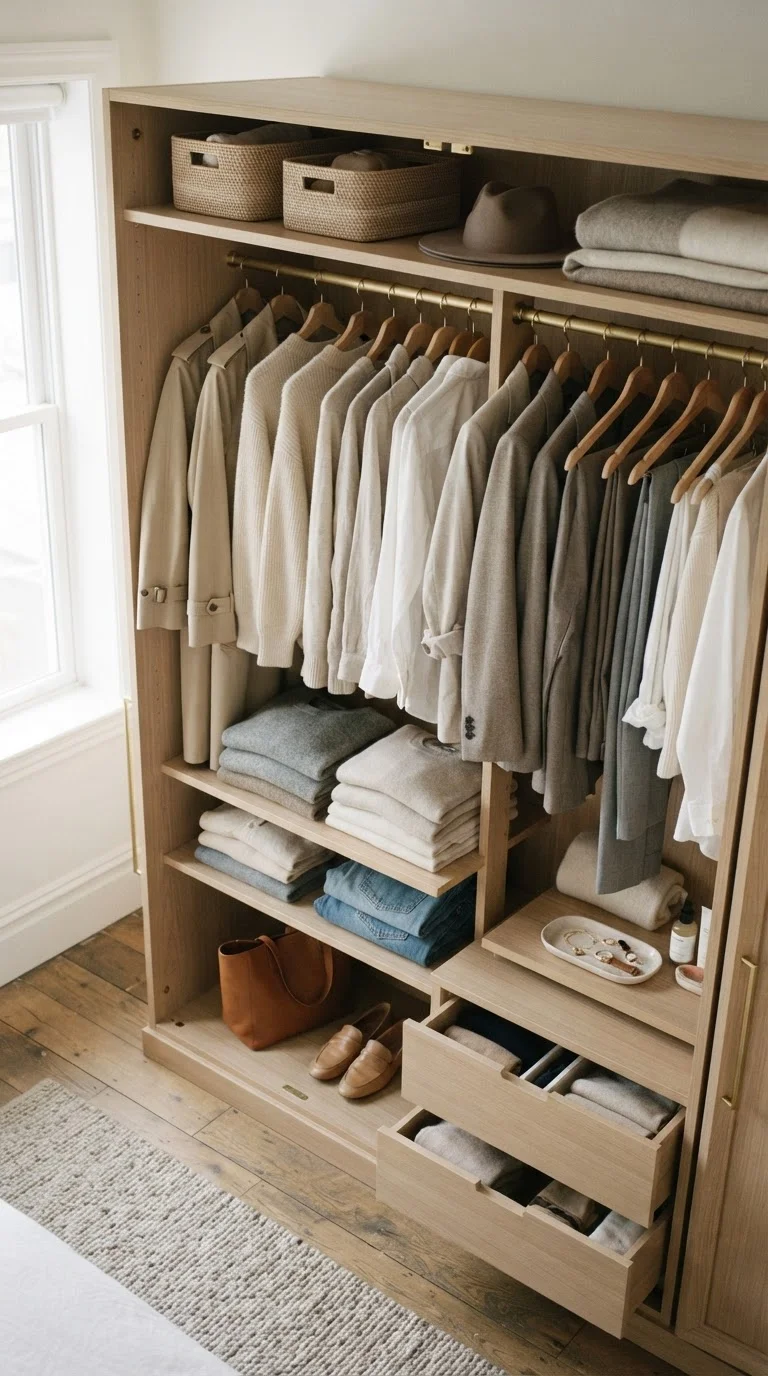
Why Getting Dressed Still Feels Hard
You open a full closet and still can't find anything to wear. It's one of the most common frustrations in personal style — and it almost never comes down to not owning enough clothes. More often, the problem is structural: specific, recurring missteps that quietly undermine even a well-intentioned wardrobe.
Understanding what's actually going wrong is the first step toward fixing it. These aren't abstract style principles — they're concrete errors with identifiable causes and practical solutions.
Ignoring fit and assuming tailoring is only for formal wear.
Why it happens: Most people try clothes on in store lighting, standing still — conditions that don't reflect how garments actually move or sit throughout the day. Off-the-rack sizing also varies widely between brands, making consistent fit hard to predict.
Building a wardrobe of statement pieces with nothing to anchor them.
Why it happens: Bold, interesting items are more exciting to shop for than basics. It's easy to keep reaching for the eye-catching option and overlook the neutral, versatile pieces that make everything else wearable.
Misreading proportion by pairing volume with volume.
Why it happens: When both the top and bottom of an outfit are oversized or heavily structured, the result reads as visually unbalanced rather than intentional. This is one of the most frequent reasons outfits that seemed fine on the hanger look wrong when worn.
Shopping to fill a mood rather than a specific wardrobe gap.
Why it happens: Retail environments — both physical and online — are designed to make items feel desirable in the moment. Buying for how something makes you feel in the store, rather than how it connects to your existing wardrobe, leads to pieces that never integrate.
Overlooking how clothing looks under real-world lighting and in motion.
Why it happens: Fitting rooms and bedroom mirrors often use flattering, controlled lighting. Natural daylight and fluorescent office lighting reveal texture, color, and fit very differently — which is why an outfit can feel right at home and look unexpectedly off by mid-morning.
Neglecting the role of seasonal context in outfit coherence.
Why it happens: People often think about individual pieces rather than how temperature, layering, and seasonal fabrics affect the whole look. A summer dress worn with the wrong transitional layer, for example, can look disjointed rather than styled.
The Deeper Patterns Worth Addressing
Most outfit failures share a common thread: decisions made in isolation rather than in context. A top purchased because it looked great on a hanger, a bold piece bought without thinking about what it pairs with, or a silhouette chosen without considering what's already in the wardrobe — each of these chips away at the coherence of your overall look.
Proportion is one of the most overlooked dimensions. Understanding how volume, length, and fit interact explains why certain combinations simply work while others don't, regardless of how much you like each individual piece.
Don't Confuse Quantity With Versatility
A larger wardrobe doesn't automatically produce more outfit options. When pieces don't connect with each other — different color palettes, mismatched formality levels, or incompatible silhouettes — the net result is decision fatigue, not flexibility. Cohesion comes from intentional curation, not accumulation.
The same logic applies to building a functional wardrobe foundation. Pieces that earn their space are ones that connect easily with what you already own — not just items that look appealing in isolation. And if you've ever struggled with why mixed patterns either look intentional or chaotic, the logic behind pattern combinations is more learnable than it appears.
Correcting these habits doesn't require a wardrobe overhaul or a larger budget. It requires a clearer framework for evaluating what you already have — and making more deliberate choices going forward.
~80%
Clothes worn rarely or never
Research on consumer wardrobe habits consistently suggests people regularly wear a small fraction of what they own, with most items rarely or never used after purchase.
Fit
Top factor in perceived style
Fashion educators and image consultants broadly agree that proper fit has a greater impact on how an outfit reads than the price, brand, or trend status of the clothing.
The content on this site is for informational purposes only and is not a substitute for professional advice. Always consult a qualified professional for guidance specific to your situation.