
Why Proportion Is the Invisible Architecture of Every Outfit
When an outfit works, people rarely say why. They notice the result — pulled together, effortless, confident — without identifying the mechanism. That mechanism, more often than not, is proportion. It's the relationship between the sizes, lengths, and volumes of what you're wearing, and it operates below conscious awareness in the way a viewer's eye moves across your look.
Proportion is not about body size. It's a design principle that applies equally to all frames and budgets. Understanding it means you can troubleshoot an outfit that feels off, make more informed decisions when shopping, and build combinations that work reliably — not just by luck.
Silhouette is the broader shape your outfit creates. It's the first piece of visual information registered before color, fabric, or detail. A structured blazer and tailored trousers create one silhouette; an oversized coat over a slip dress creates another. Neither is inherently better, but understanding what shape you're projecting lets you choose intentionally. Common outfit missteps are often rooted in silhouette confusion — pieces that individually look good but collectively create a shape without logic.
The Core Rule: Volume Contrast Creates Balance
The most functional proportion principle in everyday dressing is volume contrast. When one part of an outfit is loose or full, the other should be fitted. This isn't a rigid rule, but a guiding logic that prevents outfits from reading as formless or — in the opposite direction — stiff and overly constructed.
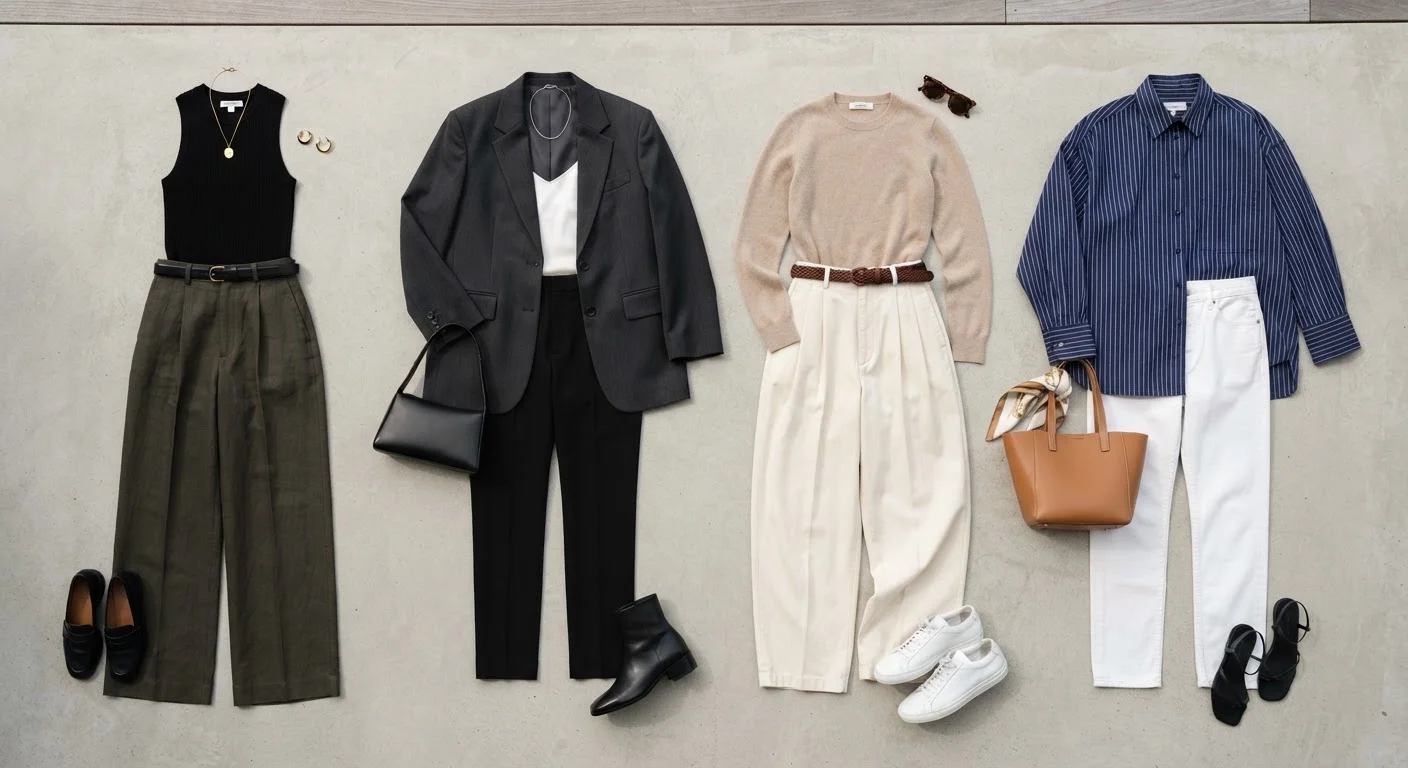
- Wide-leg or full trousers pair cleanly with a fitted or tucked-in top. The volume is below; the structure is above.
- An oversized or boxy top balances against slim or straight-leg bottoms. The volume shifts upward.
- Full skirts work with close-fitting tops for the same reason: contrast defines both pieces.
When both pieces carry similar volume — say, a billowy top with wide, relaxed trousers — the result can work, but it requires intention. Monochromatic color (a single tone throughout) and a defined waistline, through a belt or slight tuck, keep the silhouette from dissolving entirely.
Start With One Volume Rule Per Outfit
Before adding accessories or layering, establish your volume balance first: decide whether the top or the bottom will carry more volume and dress accordingly. This single decision resolves the majority of proportion problems before they start. Everything else — belts, layers, shoes — can then support a silhouette you've already grounded.
Fit and proportion are related but distinct. Proportion is about how pieces relate to each other; fit is about how each individual piece sits on your body. Both matter, and improving fit is usually the faster fix.
Length and the Visual Weight of Hemlines
Where a hemline falls relative to your body changes how the eye moves — and that affects perceived height, proportion, and overall balance. This is particularly relevant for tops, because top length determines where the viewer's eye lands before traveling down.
A cropped top that ends at or above the natural waist creates a longer visual leg line. A top that ends mid-hip tends to be the most neutral. A top that falls below the hip — particularly one that ends mid-thigh — can visually shorten the leg line unless balanced by footwear or a vertical element elsewhere.
For layering, hemline sequencing matters. When pieces are layered, each visible hem creates a horizontal line. Too many horizontal breaks at different lengths fragment the silhouette. Keeping layer lengths either close together or deliberately graduated — each noticeably shorter or longer than the one beneath — reads as more intentional than layers that end at similar but not identical lengths. See our guide to seasonal dressing for how these principles apply when layering for warmth.
~70%
Of style dissatisfaction linked to fit and proportion
Fashion educators and stylists broadly estimate that most dressing frustrations trace back to fit and proportion issues rather than a lack of clothing options.
3 seconds
Time to register a silhouette visually
Visual perception research suggests the human eye registers the overall shape of a figure within seconds — before processing color, texture, or detail.
Applying Proportion Across Style Contexts
These principles hold whether you're dressing casually, professionally, or for a specific occasion. The underlying logic doesn't change — only the garments do.
In a work context, a structured blazer with a looser trouser creates a professional silhouette with inherent volume contrast. In casual dressing, an oversized crewneck with slim jeans follows the same logic in a relaxed register. For occasion wear, a full skirt paired with a simple fitted bodice is a classic application of the same balance principle.
Color and pattern interact with proportion in meaningful ways. A bold print on a voluminous piece amplifies its visual weight; the same print on a fitted piece reads more controlled. Understanding this means you can use color coordination and pattern mixing as tools to reinforce proportion choices, not just aesthetic ones.
Once you understand the visual logic of proportion and silhouette, getting dressed becomes less about guesswork and more about deliberate choices — a shift that works for any wardrobe, at any price point.
Frequently Asked Questions
Proportion refers to how different elements of an outfit — top length, bottom volume, sleeve width — relate to each other and to your frame. When these elements feel balanced, an outfit reads as cohesive. When they clash in scale, the result tends to look unintentional even if you can't pinpoint why.
A flattering silhouette is one that creates a visual shape you feel confident in — not one that conforms to a narrow beauty standard. Most style advice centers on balance: an outfit that contrasts volume at the top versus bottom tends to feel more intentional than one that is uniformly loose or uniformly tight throughout.
Petite frames often benefit from keeping hemlines higher or at the natural waist to lengthen the leg line visually. Avoiding too many horizontal breaks — like a tucked shirt creating a strong color contrast at the hip — can also help prevent the eye from chopping the body into shorter segments.
No. Proportion principles apply to all body types because they're about visual logic, not size. The goal is balance and intention, not conforming to any particular ideal shape. What counts as 'balanced' is also personal — the key is understanding the principles so you can apply them to your own preferences.
Proportion can improve how a look reads overall, but fit is a separate and foundational issue. An ill-fitting garment — one that pulls, gaps, or bunches incorrectly — will undermine even a well-proportioned outfit. Addressing fit first, through tailoring or sizing, gives proportion principles the best foundation to work from.
The most accessible rule: pair one loose or voluminous piece with one fitted piece. Wide-leg trousers with a tucked-in fitted top, or an oversized sweater with slim straight-leg jeans — both follow this logic. It creates contrast that reads as deliberate without requiring any style expertise.
The content on this site is for informational purposes only and is not a substitute for professional advice. Always consult a qualified professional for guidance specific to your situation.