

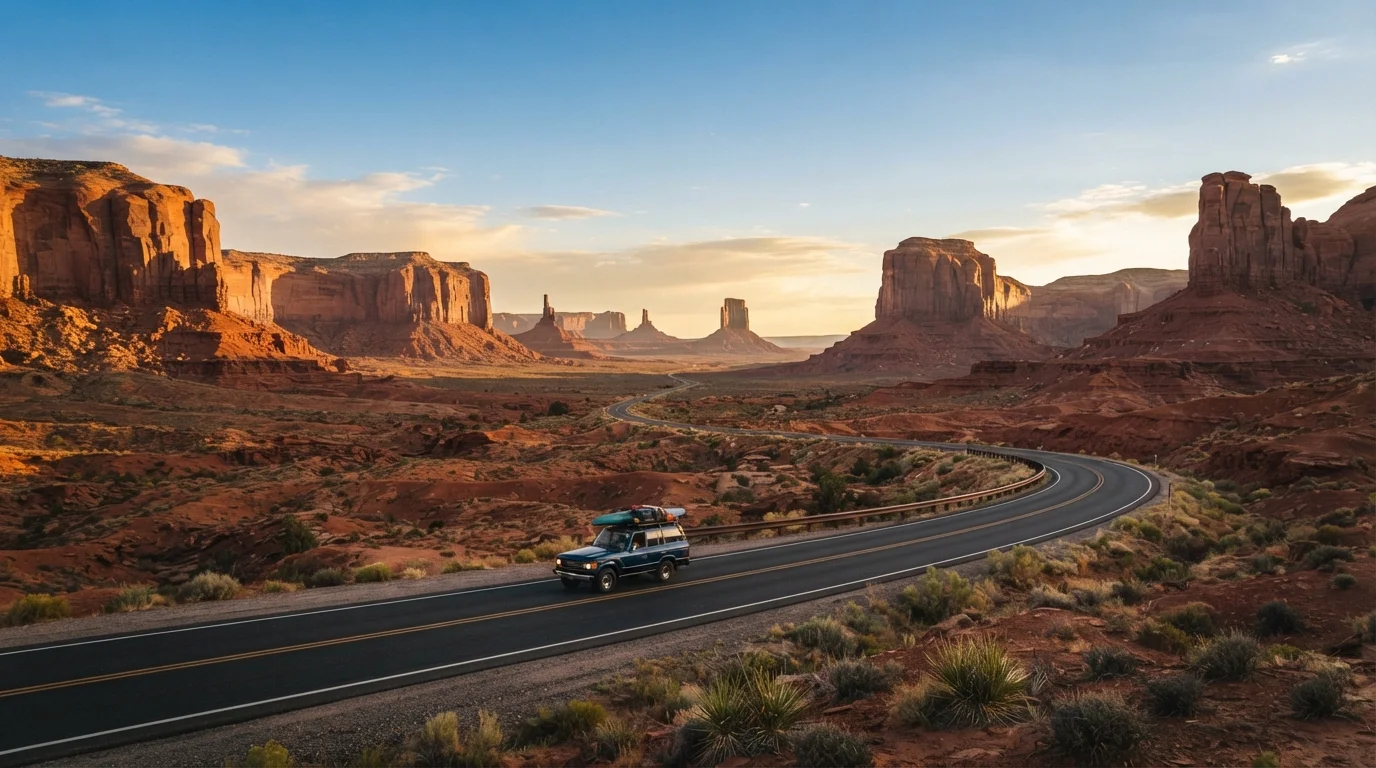
The Case for Going Off the Famous Roads
Everyone knows about Route 66 and the Pacific Coast Highway. They're iconic for a reason. But the sheer size of the United States means thousands of miles of equally spectacular driving remain largely unsung — no bumper-to-bumper traffic, no sold-out roadside motels, just genuine discovery.
If you're curious about how "off the beaten path" actually works in practice — trade-offs included — it's worth thinking critically before you plot your route. Less-traveled doesn't always mean easier or safer; it means different, and often deeply rewarding when you go in with clear expectations.
The routes below represent a cross-section of American geography, history, and culture. None require specialized vehicles or advanced driving skills, though some pass through remote stretches where services are limited. Check current road conditions, advisories, and any entry requirements through official state and federal transportation sources before you go.
Build in buffer days on lesser-known routes
Underrated routes often reveal unexpected gems — a roadside museum, a local diner with a two-hour wait, a trailhead you hadn't planned to visit. Build at least one unscheduled day into any multi-stop itinerary so you have room to linger. Rigid schedules are the enemy of the best road trip moments.
Seven Routes That Deserve More Attention
The Loneliest Road — US Route 50, Nevada
Stretching roughly 400 miles across the heart of Nevada, US Route 50 earned its nickname from a 1986 Life magazine feature that called it "the loneliest road in America." Nevada's tourism board leaned into the label, and today the route is a celebration of basin-and-range landscape, ghost towns, and frontier history. Expect long distances between gas stations — fill up whenever you can.
US Route 50 crosses Nevada's emptiest terrain, rewarding patient drivers with ghost towns and raw desert grandeur.
The Natchez Trace Parkway — Mississippi to Tennessee
Managed by the National Park Service, this 444-mile corridor follows the path of an ancient travel route used by Indigenous peoples, traders, and early American settlers. The parkway prohibits commercial vehicles, keeping it peaceful and scenic year-round. Pull-offs reveal Civil War sites, Native American mounds, cypress swamps, and hardwood forests draped in Spanish moss.
The Natchez Trace Parkway is one of the most historically layered drives in the American South.
The Upper Peninsula, Michigan — M-28 and M-123
Michigan's Upper Peninsula sits at the intersection of the Great Lakes and dense boreal forest, offering waterfall hunting, dramatic lake-superior shorelines, and small-town hospitality. M-28 runs east-west across the UP's midsection while M-123 cuts toward Tahquamenon Falls, one of the largest waterfalls east of the Mississippi. Fall foliage here rivals New England without the crowds.
Michigan's Upper Peninsula delivers waterfall scenery and Lake Superior shorelines that routinely surprise first-time visitors.
The Turquoise Trail — New Mexico Highway 14
Running between Albuquerque and Santa Fe, New Mexico Highway 14 is a 50-mile alternative to the interstate that threads through high-desert mining towns, including Madrid and Cerrillos — both of which have reinvented themselves as art and antique destinations. The Sandia Mountains form a dramatic backdrop throughout, and the elevation means cooler temperatures than the surrounding desert valleys.
New Mexico's Turquoise Trail packs art communities, mining history, and mountain scenery into just 50 miles.
The Volcanic Legacy Scenic Byway — Oregon and California
This 500-mile byway links Crater Lake National Park in Oregon with Lassen Volcanic National Park in Northern California, passing through a landscape shaped entirely by volcanic activity. Cinder cones, lava flows, hot springs, and alpine lakes line the route. The byway is less driven than coastal Oregon routes, meaning more elbow room at extraordinary overlooks. Verify seasonal road openings, as higher elevations can see snow well into late spring.
The Volcanic Legacy Scenic Byway connects two national parks through terrain unlike anywhere else in North America.
The Great River Road — Following the Mississippi
The Great River Road is a network of connected state highways that traces the Mississippi River from Minnesota to the Gulf of Mexico — nearly 3,000 miles in total. Most travelers sample a section rather than the full length. The stretch through the bluff country of southeastern Minnesota and Wisconsin offers some of the most dramatic river scenery in the country, while the Deep South segments reveal plantation history and Delta blues culture.
The Great River Road offers a cross-section of American history, geography, and culture along nearly 3,000 miles of river.
The Beartooth Highway — Montana and Wyoming
Often described by drivers as one of the most visually stunning roads on the continent, the Beartooth Highway climbs to nearly 11,000 feet as it connects Red Lodge, Montana, to the northeast entrance of Yellowstone National Park. Switchbacks, alpine tundra, and panoramic views of the Absaroka and Beartooth ranges make this a slow, deliberate drive. The highway is typically open only from late May through mid-October — check the Wyoming Department of Transportation for current status before visiting.
The Beartooth Highway reaches nearly 11,000 feet, delivering alpine scenery that stops drivers in their tracks.
Always verify road conditions and services
Several routes on this list pass through genuinely remote areas with limited cell service, infrequent gas stations, and seasonal closures. Before departing, consult the relevant state department of transportation and National Park Service websites for current conditions. Letting someone know your planned route and expected arrival time is a simple safety habit worth building. For broader travel planning myths to avoid, it's also worth questioning common assumptions before you hit the road.
Making the Most of Your Drive
The richest road trips don't just happen — they're shaped by a little preparation and a lot of openness. If you're new to planning a multi-day drive from scratch, the Road Trip Planning from Scratch guide walks through everything from route mapping to vehicle prep to lodging logistics.
Many of the routes above thread through communities that sit near the Appalachian Trail corridor or adjacent wilderness, meaning a single road trip can blend driving, hiking, local dining, and cultural history into one cohesive trip. And if you're still deciding whether a road trip is even the right format for your next vacation, this framework for choosing between city breaks and nature escapes can help you weigh the options clearly.
Whatever route calls to you, the open road is far bigger and more varied than any single famous corridor suggests. The best drive you ever take might be one most people haven't heard of yet.
The content on this site is for informational purposes only and is not a substitute for professional advice. Always consult a qualified professional for guidance specific to your situation.